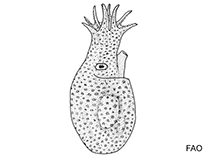
Cephalopoda |
Octopoda |
Bolitaenidae
পরিবেশ: পরিবেশ / জলবায়ু অঞ্চল / গভীরতার পরিসীমা / বিতরণ পরিসীমা
বাস্তুসংস্থান
ভাসমান; গভীরতার পরিসীমা 100 - 1400 m (সূত্র 96968). Subtropical
Indo-Pacific, Atlantic Ocean and the Mediterranean. Subtropical to subtropical.
প্রথম পরিপক্কতার সময় দৈর্ঘ্য / আকৃতি / ওজন / বয়স
পরিপক্কতা : Lm ? range ? - ? cm Max length : 11.5 cm ML পুরুষ/ লিঙ্গ অনিধর্ারিত ; (সূত্র 122436)
Depth range from 100 to 1,400 m. These small pelagic octopuses typically live over deeper water. Young animals tend to occur in the shallower end of the range. As members of this species reach sexual maturity the iridescence of the digestive gland and eyes is lost and animals migrate to deeper darker waters. Pigmentation greatly increases in females as they mature and the arms become relatively longer. Increased pigmentation may be associated with the need to mask output from the female's circumoral light organ. This light organ may be used for reproductive signalling to males. The posterior salivary glands of mature males are greatly enlarged and have been suggested to produce a chemical attractant for females (Ref. 96968).
জীবনচক্র এবং প্রজনন আচরণ
পরিপক্কতা | প্রজনন | ডিম ছাড়া | ডিমসমূহ | ডিম্বধারন ক্ষমতা | শুককীট
Members of the class Cephalopoda are gonochoric. Male and female adults usually die shortly after spawning and brooding, respectively. Mating behavior: Males perform various displays to attract potential females for copulation. During copulation, male grasp the female and inserts the hectocotylus into the female's mantle cavity where fertilization usually occurs. Life cycle: Embryos hatch into planktonic stage and live for some time before they grow larger and take up a benthic existence as adults.
Turgeon, D.D., J.F. Quinn Jr., A.E. Bogan, E.V. Coan, F.G. Hochberg, W.G. Lyons, P.M. Mikkelsen, R.J. Neves, C.F.E. Roper, G. Rosenberg, B. Roth, A. Scheltema, F.G. Thompson, M. Vecchione and J.D. Willams 1998 Common and scientific names of aquatic invertebrates from the United States and Canada: Mollusks, 2nd ed. American Fisheries Society (Special publication 26), Bethesda, Maryland. 526 p. (সূত্র 1667)
আইইউসিএন রেড লিস্টের অবস্থা
(সূত্র 130435: Version 2025-2 (Global))
CITES অবস্থা (সূত্র 108899)
Not Evaluated
Not Evaluated
মানুষের জন্য হুমকি
মানুষের ব্যবহার
FAO - Publication: search | FishSource |
হাতিয়ার
আরো তথ্য
জনসংখ্যার গতিশীলতাবৃদ্ধিসর্বোচ্চ বয়স / আকারদৈর্ঘ্য-ওজন সম্পর্ক।দৈর্ঘ্য-দৈর্ঘ্য rel.দৈর্ঘ্য-ফ্রিকোয়েন্সিগণ রূপান্তরপ্রাচুর্য জীবনচক্রপ্রজনন পরিপক্কতা ডিম্বধারন ক্ষমতা ডিম ছাড়া ডিমসমূহডিমের বিকাশশুককীট শারীরবিদ্যাঅম্লজান ব্যবহার
মানব সম্পর্কিতডাকটিকিট, মুদ্রা, বিবিধ।
ইন্টারনেট সুত্র
মডেলের উপর ভিত্তি করে অনুমান
মাছ ধরার ঝুঁকিপূর্ণতা
(সূত্র 71543) |
Low vulnerability (10 of 100). |
মূল্য বিভাগ
(সূত্র 80766): |
Unknown. |