Aves |
Procellariiformes |
Diomedeidae
Environment: milieu / climate zone / depth range / distribution range
Ecology
Pelagic. Subtropical
Pacific Ocean.
Length at first maturity / Size / Weight / Age
Maturity: Lm ? range ? - ? cm Max length : 94.0 cm TL male/unsexed; (Ref. 8812); max. published weight: 0.00 g (Ref. 356)
Wing: 21.3 cm.
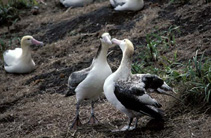
Total Length: 84 to 89 cm (Ref. 8812). Convention on the Conservation of Migratory Species of Wild Animals. Offshore (Ref. 356). Uses air currents to glide and soar for long periods of time and feeds by seizing prey from the surface while sitting on the water. Forages closer to land than other albatross species. Scavenges on carrion and follows fishing boats. Diet consists primarily of shrimp, squid, and fish, including bonito, flyingfish and sardines (Ref. 122680).
Life cycle and mating behavior
Maturity | Reproduction | Spawning | Eggs | Fecundity | Larvae
Lepage, D. 2007 Avibase -the World Bird Database. http://www.bsc-eoc.org/avibase/avibase.jsp [accessed 09/07/2007]. (Ref. 7816)
IUCN Red List Status
(Ref. 130435: Version 2025-2 (Global))
CITES status (Ref. 108899)
Threat to humans
Human uses
FAO - Publication: search | FishSource |
Tools
More information
Population dynamicsGrowth
Max. ages / sizes
Length-weight rel.
Length-length rel.
Length-frequencies
Mass conversion
Abundance
Life cycleReproductionMaturityFecunditySpawningEggsEgg developmentLarvae PhysiologyOxygen consumption
Human RelatedStamps, coins, misc.
Internet sources
Estimates based on models
Fishing Vulnerability
(Ref. 71543) |
High vulnerability (58 of 100). |
Price category
(Ref. 80766): |
Unknown. |