Malacostraca |
Decapoda |
Xanthidae
محیط زیست: محیط زیست / منطقه آب و هوایی / تغييرات عمق / محدوده توزیع
بوم شناسي
وابسته به آب سنگ; تغييرات عمق 0 - 5 m (مرجع 96667). Tropical; 31°N - 28°S, 33°E - 134°W
Indo-Pacific, from Red Sea eastwards to Hawaii and French Polynesia.
طول در اولین بلوغ / اندازه / وزن / سن
بلوغ: Lm ? range ? - ? cm Max length : 15.0 cm CW جنس نر / بدون خواص جنسي; (مرجع 343)
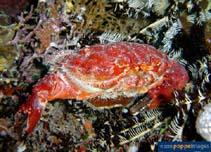
Carapace ovate, surfaces smooth; 8 large teeth on each anterolateral margin (often with smaller denticles between them); front divided into 2 distinct lobes, separated by distinct V-shaped cleft. Carpus of cheliped with 2 spines on inner margin. Pincers are very large and unequal, the arm has 1 to 3 spines on the upper border (Ref. 128968). Color: red to reddish brown overall.
Adults are often found in shallow waters and coral reefs (Ref. 128968). Marginal levels of toxicity were detected in this species which may contribute to human poisoning (Ref. 107779). Occurs at intertidal reef areas. Benthic. Subtropical and tropical climates (Ref. 343). Mildly poisonous (Ref. 103037). Members of the family Xanthidae range from being algal scrapers to aggressive predators (Ref. 103027).
چرخه زندگی و رفتار جفتگیری
بلوغ | تولید مثل | تخم ریزی | تخم ها | باروری | توزاد ( لارو)
Members of the order Decapoda are mostly gonochoric. Mating behavior: Precopulatory courtship ritual is common (through olfactory and tactile cues); usually indirect sperm transfer.
مآخذ اصلی
مراجع | هماهنگ كننده | همكاران
Ng, P.K.L. 1998 Crabs. p. 1045-1155. In K.E. Carpenter and V.H. Niem (eds) FAO species identification guide for fishery purposes. The living marine resources of the Western Central Pacific. Volume 2. Cephalopods, crustaceans, holothurians and sharks. Rome, FAO. 1998. pp. 687-1396. (مرجع 343)
وضعيت در فهرست قرمز IUCN
(مرجع 130435: Version 2025-2 (Global))
وضعيت از نظر سايتس (مرجع 108899)
Not Evaluated
Not Evaluated
خطر برای انسان ها
Poisonous to eat (مرجع 107779)
استفاده انسانی
ماهي گيري – شيلات: تجاري
FAO - Publication: search | FishSource | دریای اطراف ما
ابزارها
اطلاعات بيشتر
بومشناسی گرمسیریاقلام غذایی (طعمهها)
تركيب غذايي
مصرف غذايي
شکارچیان
پویایی جمعیترشد
حداکثر سن/اندازه
نسبت طول-وزن.
طول-طول نسبی.
نوسانات طولی
تبدیل انبوه
فراواني
چرخه زندگیتولید مثلبلوغباروریتخم ریزیتخم هانمو تخمتوزاد ( لارو) مرتبط با انسانتمبر، سکه، متفرقه.
منابع اينترنتي
تخمینها بر اساس مدلها
آسیبپذیری ماهیگیری
(مرجع 71543) |
Low vulnerability (10 of 100). |
طبقه قيمت
(مرجع 80766): |
Unknown. |
Nutrients
|
Calcium = 109 [35, 184] mg/100g; Iron = 1.59 [1.21, 1.97] mg/100g; Protein = 20.2 [19.2, 21.3] %; Omega3 = 0.285 [0.185, 0.386] g/100g; Selenium = 48.3 [-31.7, 128.3] μg/100g; VitaminA = 0 μg/100g; Zinc = 1.79 [1.17, 2.40] mg/100g (wet weight); based on nutrient studies. |