Gastropoda |
Neogastropoda |
Muricidae
Entorno: milieu / zona climática / rango de profundidad / gama de distribución
Ecología
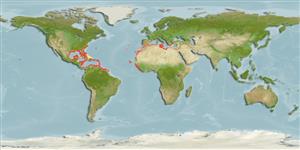
Benthic; rango de profundidad 0 - 538 m (Referencia 83435). Tropical, preferred 25°C (Referencia 107945); 37°N - 4°N, 97°E - 51°E (Referencia 83435)
Southeast Pacific, Atlantic Ocean and the Mediterranean.
Longitud en la primera madurez / Tamaño / Peso / Edad
Madurez: Lm ? range ? - ? cm Max length : 8.0 cm NG macho / no sexado; (Referencia 83435); common length : 8.0 cm TL macho / no sexado; (Referencia 355)
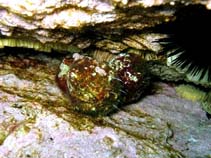
Shell solid, elongate. Shell sculpture of fine spiral lines with weak axial growth lines. Last whorls sometimes with nodules on shoulder. Colour: variable, light grey, yellowish, or tan, usually mottled or checkered with darker brown, greyish, or orange marks.
On all kinds of hard substrates, intertidal to subtidal. Diet: oyster and mussel beds (Ref. 355). Common on subtidal rocks (Ref. 438 and 417).
Ciclo vital y comportamiento de apareamiento
Madurez | Reproducción | Puesta | Huevos | Fecundidad | Larva
The species displays poecilogonony as its reproductive strategy.
Leal, J.H. 2003 Gastropods. p. 99-147. In Carpenter, K.E. (ed.). The living marine resources of the Western Central Atlantic. Volume 1: Introduction, molluscs, crustaceans, hagfishes, sharks, batoid fishes, and chimaeras. FAO Species Identification Guide for Fishery Purposes and American Society of Ichthyologists and Herpetologists Special Publication No. 5. 1600p. (Referencia 355)
Situación en la Lista Roja de la UICN
(Referencia 130435: Version 2025-2 (Global))
Estatus CITES (Referencia 108899)
Not Evaluated
CMS (Referencia 116361)
Not Evaluated
Amenaza para el ser humano
Harmless
Usos humanos
Pesquerías: comercial
FAO - Publication: search | FishSource | Sea Around Us
Herramientas
Más información
Dinámica de la poblaciónCrecimientoEdades / tallas máximasLongitud-peso rel.Longitud-longitud rel.Longitud-frecuenciasConversión de masasAbundancia Ciclo de vidaReproducciónMadurezFecundidadPuestaHuevosDesarrollo de los huevosLarva FisiologíaConsumo del oxígeno
Relacionados con el ser humanoSellos, monedas, varios
Fuentes de Internet
Estimaciones basadas en modelos
Vulnerabilidad pesquera
(Referencia 71543) |
Low vulnerability (10 of 100). |
Vulnerabilidad climática
(Referencia 125649) |
Moderate to high vulnerability (49 of 100) |
Categoría de precios
(Referencia 80766): |
Unknown. |
Nutrients
|
Calcium = 126 [75, 177] mg/100g; Iron = 4.79 [1.67, 7.92] mg/100g; Protein = 15.9 [14.8, 16.9] %; Omega3 = 0.331 [0.263, 0.400] g/100g; Selenium = 57.8 [48.5, 67.2] μg/100g; VitaminA = 0 μg/100g; Zinc = 1.97 [0.92, 3.02] mg/100g (wet weight); based on nutrient studies. |