Hexacorallia |
Scleractinia |
Acroporidae
Milieu: milieu / Klimaatzone / Diepte / verspreidingsgebied
Ecologie
Rifbewoner; diepte 2 - 20 m (Ref. 98471). Tropical; 28°N - 34°S, 27°E - 170°W (Ref. 846)
Indo-Pacific. Tropical to subtropical.
Lengte bij maturiteit / Grootte / Gewicht / Leeftijd
Maturiteit: Lm ? range ? - ? cmCommon length : 9.9 cm DL mannelijk / geslacht onbekend; (Ref. 269)
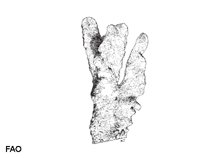
Colonies are formed of thick encrustations that develop atout (usually less than 10 cm in diameter), vertical, irregulary shaped branches, depending on exposure to wave action. May dominate wave-washed communities due to its solid construction. Axial corallites are difficult to distinguish due to the large area of branch tip. Many colonies consist of less than 12 main branches (Ref. 269).
Usually less than 10 cm. Common in shallow and intermediate depths (Ref. 269). Occurs subtidally on deeper areas of reef flat, edge, slope, walls and submerged reefs (Ref. 98471).
Levenscyclus en paargedrag
Maturiteit | Voortplanting | Paaien | Eieren | Fecunditeit | Larven
Hermaphroditic (Ref. 113712). Mature gametes are shed into the coelenteron and spawned through the mouth. Life cycle: The zygote develops into a planktonic planula larva. Metamorphosis begins with early morphogenesis of tentacles, septa and pharynx before larval settlement on the aboral end (Ref. 833).
Hodgson, G. 1998 Corals. p. 101-122. In Carpenter, K.E. and V.H. Niem (eds) FAO species identifidication guide for fishery purposes. The living marine resources of the Western Central Pacific. Vol. 1. Seaweeds, coral, bivalves and gastropods. FAO Rome. (Ref. 269)
Status op de Rode Lijst van het IUCN
(Ref. 130435: Version 2025-2 (Global))
CITES status (Ref. 108899)
Not Evaluated
Gevaar voor de mens
Gebruik door de mens
FAO - Publication: search | FishSource |
Tools
Meer informatie
Trofische ecologieVoedsel (prooien)
Dieetsamenstelling
Voedselconsumptie
Predatoren
PopulatiedynamicaGroei
Max. leeftijden / maten
Lengte-gewicht rel.
Lengte-lengte rel.
Lengtefrequenties
Massaconversie
Abundantie
LevenscyclusVoortplantingMaturiteitFecunditeitPaaienEierenOntwikkeling van de eierenLarven FysiologieZuurstofverbruik
Menselijk gerelateerdPostzegels, munten, diversen.
Internetbronnen
Schattingen op basis van modellen
Kwetsbaarheid van de visserij
(Ref. 71543) |
(0 of 100). |
Prijsklasse
(Ref. 80766): |
Unknown. |