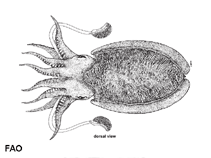
Cephalopoda |
Sepiida |
Sepiidae
Miljö: miljö / Klimatzon / djupintervall / distributionsområde
Ekologi
Benthic; havsvandrande (Ref. 75927); djupintervall 10 - 150 m (Ref. 275), usually 60 - 150 m (Ref. 75927). Subtropical; 15°C - 25°C (Ref. 75927); 41°N - 6°N, 104°E - 138°E (Ref. 1695)
Western Pacific: South and East China seas, Japan to Philippines and Indonesia.
Längd vid första mognad / Storlek / Vikt / Ålder
Könsmognad: Lm ? range ? - ? cm Max length : 18.0 cm ML hane/ej könsbestämd; (Ref. 275); publicerad maxvikt: 600.00 g (Ref. 1695)
Caught by otter trawls, pound nets, hoop nets and hook-and-line (Ref. 346). Sometimes found burrowing in the substrate (Ref. 275).
Livscykel och parningsbeteende
Könsmognad | Reproduktion | Lek | Ägg | Fekunditet | Larver
Members of the class Cephalopoda are gonochoric. Male and female adults usually die shortly after spawning and brooding, respectively. Mating behavior: Males perform various displays to attract potential females for copulation. During copulation, male grasp the female and inserts the hectocotylus into the female's mantle cavity where fertilization usually occurs. Life cycle: Embryos hatch into planktonic stage and live for some time before they grow larger and take up a benthic existence as adults.
Roper, C.F.E., M.J. Sweeney and C.E. Nauen 1984 FAO Species Catalogue. Vol. 3. Cephalopods of the world. An annotated and illustrated catalogue of species of interest to fisheries. FAO Fish. Synop. 125(3):277p. Rome: FAO. (Ref. 275)
Status på IUCN:s rödlista
(Ref. 130435: Version 2025-2 (Global))
CITES-status (Ref. 108899)
Not Evaluated
Not Evaluated
Hot mot människor
Mänskliga användningsområden
Fiskeri: kommersiell
FAO - Publication: search | FishSource |
Verktyg
Ytterligare information
MänniskorelateradFrimärken, mynt, diverse.
Internet-källor
Uppskattningar baserade på modeller
Rate of population increase
|
Prior r = 0.31, 95% CL = 0.20 - 0.47, Based on 1 full stock assessment. |
Sårbarhet i fisket
(Ref. 71543) |
Low vulnerability (10 of 100). |
Priskategori
(Ref. 80766): |
High. |