Cephalopoda |
Octopoda |
Octopodidae | Octopodinae
Milieu: milieu / Klimaatzone / Diepte / verspreidingsgebied
Ecologie
Benthic. Tropical
Western Pacific: Australia.
Lengte bij maturiteit / Grootte / Gewicht / Leeftijd
Maturiteit: Lm ? range ? - ? cm Max length : 43.0 cm TL mannelijk / geslacht onbekend; (Ref. 96968); max. gepubliceerd gewicht: 340.00 g (Ref. 96968)
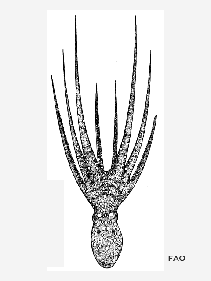
Its mantle length is 8 cm (Ref. 96968). Inhabits intertidal to shallow subtidal in coral reefs. It emerges at night to forage (Ref. 96968).
Levenscyclus en paargedrag
Maturiteit | Voortplanting | Paaien | Eieren | Fecunditeit | Larven
Members of the class Cephalopoda are gonochoric. Male and female adults usually die shortly after spawning and brooding, respectively. Mating behavior: Males perform various displays to attract potential females for copulation. During copulation, male grasp the female and inserts the hectocotylus into the female's mantle cavity where fertilization usually occurs. Life cycle: Embryos hatch into planktonic stage and live for some time before they grow larger and take up a benthic existence as adults.
Bisby, F.A., M.A. Ruggiero, K.L. Wilson, M. Cachuela-Palacio, S.W. Kimani, Y.R. Roskov, A. Soulier-Perkins and J. van Hertum 2005 Species 2000 & ITIS Catalogue of Life: 2005 Annual Checklist. CD-ROM; Species 2000: Reading, U.K. (Ref. 19)
Status op de Rode Lijst van het IUCN
(Ref. 130435: Version 2025-2 (Global))
CITES status (Ref. 108899)
Not Evaluated
Not Evaluated
Gevaar voor de mens
Gebruik door de mens
FAO - Publication: search | FishSource |
Tools
Meer informatie
Trofische ecologieVoedsel (prooien)
Dieetsamenstelling
Voedselconsumptie
Predatoren
PopulatiedynamicaGroei
Max. leeftijden / maten
Lengte-gewicht rel.
Lengte-lengte rel.
Lengtefrequenties
Massaconversie
Abundantie
LevenscyclusVoortplantingMaturiteitFecunditeitPaaienEierenOntwikkeling van de eierenLarven FysiologieZuurstofverbruik
Menselijk gerelateerdPostzegels, munten, diversen.
Internetbronnen
Schattingen op basis van modellen
Kwetsbaarheid van de visserij
(Ref. 71543) |
Low to moderate vulnerability (33 of 100). |
Prijsklasse
(Ref. 80766): |
Low. |