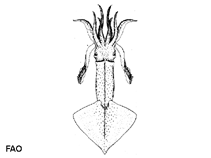
Cephalopoda |
Oegopsida |
Onychoteuthidae
पर्यावरण: पर्यावरण / जलवायु क्षेत्र / गहराई सीमा / वितरण सीमा
पारिस्थितिकी
पिलाजिक; गहराई सीमा 0 - 800 m (संदर्भ 275). Tropical; 70°N - 44°S, 180°W - 180°E (संदर्भ 97142)
Circumglobal in warm and temperate oceanic waters.
प्रथम परिपक्वता पर लंबाई / आकार / वज़न / आयु
परिपक्व अवधि: Lm ? range ? - ? cm Max length : 37.0 cm ML पुल्लिंग / अलिंग; (संदर्भ 97142)
Also caught using jigs (Ref. 417) and dip nets (Ref. 275). Medium-sized squid; mantle length up to 300 mm (370 mm only in the northern Pacific Ocean, Nesis 1982, 1987) (Ref. 97142). Oceanic, eurythermal, meso- and epipelagic species that occurs from the surface to 150 m depth and as deep as 4, 000 m. A schooling species frequently observed "flying" above the surface to escape predators in pursuit. Very dense muscular structure and high respiration rates confirm it is a fast-swimming, slow-growing species. Paralarvae are abundant in the eastern Atlantic Ocean, particularly from January to March. Spent females have severely degenerated muscular tissue of head, mantle, fins, as well as missing tentacles, so that they appear almost gelatinous. Prey consists of fishes and squids. Predators include giant red shrimp, fishes, e.g. albacore, yellowfin tuna, lancetfish, swordfish, tiger shark, smooth hammerhead shark, spinner, Frasier’s striped and Risso’s dolphins, toothed whales and fur seals (Ref. 97142).
जीवन चक्र और संभोग व्यवहार
परिपक्व अवधि | पुनरुत्पत्ति | मछलीऔ का अंडे देना | अंडे | उपजाऊपन | लार्वा
Males mature earlier than females; synchronous oocyte development with high fecundity, i.e., more or less 200,000 eggs (Ref. 97142).
Roper, C.F.E., M.J. Sweeney and C.E. Nauen 1984 FAO Species Catalogue. Vol. 3. Cephalopods of the world. An annotated and illustrated catalogue of species of interest to fisheries. FAO Fish. Synop. 125(3):277p. Rome: FAO. (संदर्भ 275)
आईयूसीएन रेड लिस्ट स्थिति
(संदर्भ 130435: Version 2025-2 (Global))
CITES स्थिति (संदर्भ 108899)
Not Evaluated
CMS (संदर्भ 116361)
Not Evaluated
मनुष्यों के लिए ख़तरा
मानव उपयोग
मात्स्यिकी: बाबत संभावित दिलचस्पी
FAO - Publication: search | FishSource |
साधन
अधिक जानकारी
फिजियोलॉजीप्राणवायु की खपत
मानव संबंधीटिकट, सिक्के, विविध.
इंटरनेट स्रोत
मॉडल पर आधारित अनुमान
मछली पकड़ने की भेद्यता
(संदर्भ 71543) |
Low to moderate vulnerability (27 of 100). |
मूल्य श्रेणी
(संदर्भ 80766): |
Medium. |