Cephalopoda |
Sepiida |
Sepiolidae | Heteroteuthinae
पर्यावरण: पर्यावरण / जलवायु क्षेत्र / गहराई सीमा / वितरण सीमा
पारिस्थितिकी
बेनथोपिलाजिक; गहराई सीमा 200 - 3000 m (संदर्भ 1695). Tropical; 52°N - 35°S, 85°W - 46°E (संदर्भ 106956)
Atlantic, Mediterranean, Western Indian Ocean and the Pacific.
प्रथम परिपक्वता पर लंबाई / आकार / वज़न / आयु
परिपक्व अवधि: Lm ? range ? - ? cm Max length : 2.5 cm ML पुल्लिंग / अलिंग; (संदर्भ 1695)
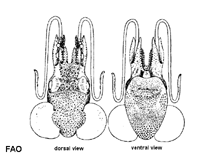
Mesopelagic or benthopelagic, but also found on the bottom at depth range to 1588 m, paralarvae found in mesopelagic and bathypelagic zones, far from coasts, with bottom depth ranging between 1,500 and 3,000 m. Adults live in groups in lower epipelagic and mesopelagic zones, common at depths between 200 and 300 m. Often found in areas inhabited by populations of red shrimps. Represents a sizeable component of the diet of several top predators, including dolphins, sharks, swordfish and tunas. Caught by pelagic nets and shrimp trawlers but of no commercial interest due to the low quantities available to fisheries (Ref. 1695).
जीवन चक्र और संभोग व्यवहार
परिपक्व अवधि | पुनरुत्पत्ति | मछलीऔ का अंडे देना | अंडे | उपजाऊपन | लार्वा
Members of the class Cephalopoda are gonochoric. Male and female adults usually die shortly after spawning and brooding, respectively. Mating behavior: Males perform various displays to attract potential females for copulation. During copulation, male grasp the female and inserts the hectocotylus into the female's mantle cavity where fertilization usually occurs. Life cycle: Embryos hatch into planktonic stage and live for some time before they grow larger and take up a benthic existence as adults.
Jereb, P. and C.F.E. Roper (eds.) 2005 Cephalopods of the world. An Annotated and Illustrated catalogue of Cephalopod species known to date. Vol. 1. Chambered nautiluses and sepioids (Nautilidae, Sepiidae, Sepiolidae, Sepiadariidae, Idiosepiidae and Spirulidae). FAO Spec. Cat. Fish. Purp. 4(1):262p. Rome: FAO. (संदर्भ 1695)
आईयूसीएन रेड लिस्ट स्थिति
(संदर्भ 130435: Version 2025-2 (Global))
CITES स्थिति (संदर्भ 108899)
Not Evaluated
CMS (संदर्भ 116361)
Not Evaluated
मनुष्यों के लिए ख़तरा
मानव उपयोग
FAO - Publication: search | FishSource |
साधन
अधिक जानकारी
जनसंख्या गतिशीलताबाढ़अधिकतम आयु/आकारलंबाई-वजन संबंधलंबाई-लंबाई संबंधलंबाई-आवृत्तियाँसामूहिक रूपांतरणबहुतायत जीवन चक्रपुनरुत्पत्तिपरिपक्व अवधिउपजाऊपनमछलीऔ का अंडे देनाअंडेअंडे का विकासलार्वा फिजियोलॉजीप्राणवायु की खपत
मानव संबंधीटिकट, सिक्के, विविध.
इंटरनेट स्रोत
मॉडल पर आधारित अनुमान
मछली पकड़ने की भेद्यता
(संदर्भ 71543) |
Low vulnerability (10 of 100). |
मूल्य श्रेणी
(संदर्भ 80766): |
Unknown. |