Cephalopoda |
Oegopsida |
Ommastrephidae | Ommastrephinae
Entorno: milieu / zona climática / rango de profundidad / gama de distribución
Ecología
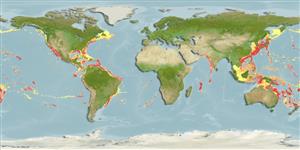
Pelágico; rango de profundidad 0 - 1300 m (Referencia 275). Tropical; 55°N - 38°S, 59°E - 8°E (Referencia 275)
Distribución
Territories | Áreas FAO | Ecosistemas | Ocurrencias, apariciones | Introducciones
Circumglobal in tropical to temperate waters.
Longitud en la primera madurez / Tamaño / Peso / Edad
Madurez: Lm ?, range 10 - 20 cm Max length : 22.7 cm ML macho / no sexado; (Referencia 104052); 180 cm ML (female); peso máximo publicado: 235.00 g (Referencia 97142)
Geographical variability of size at maturity and size morphology is pronounced. Maximum size and size at maturity increases from the low latitudes to the high latitudes (Ref. 97142). Incidentally caught by jigs (Ref. 275). True bi-peripheral oceanic species. Epipelagic and upper mesopelagic; distributed from the surface to 400 m. Inhabits open waters, mostly over great depths of more than 200 m, and is neither associated with the bottom nor slope habitats. Subadult and adult squids occasionally observed at the surface at night. Inhabit depths greater than 50 to 100 m during the day. Low or moderately abundant locally (especially in the South Pacific Ocean between 30°S and 40°S). Life span is a maximum of 1 year. Spawning occurs throughout most of the year in the lower latitudes, and during spring and summer seasons in the higher latitudes. This species is an intermittent, multibatch spawner. Prey organisms include many species of pelagic crustaceans, heteropod mollusks and larvae and juveniles of teleost fishes and squids. The known predators include lancetfish (Alepisarus ferox), shark (Sphyrna zygaena), different species of tunas, the trichichthyid fish, orange roughy (Haplostethus atlanticus), sea birds and northern fur seal. Off eastern Australia, it is preyed upon by yellowfin tuna (Thunnus albacares) and swordfish (Xiphias gladius) in the warmer surface waters associated with the East Australia Current. Most subadult and adult squids are infested with helminth parasites: larvae of nematodes and cestodes and metacercariae of trematodes of the family Didymozoidae. All forms of parasites mainly are localized on the inner wall of the stomach (Ref. 97142).
Ciclo vital y comportamiento de apareamiento
Madurez | Reproducción | Puesta | Huevos | Fecundidad | Larva
Members of the class Cephalopoda are gonochoric. Male and female adults usually die shortly after spawning and brooding, respectively. Mating behavior: Males perform various displays to attract potential females for copulation. During copulation, male grasp the female and inserts the hectocotylus into the female's mantle cavity where fertilization usually occurs. Life cycle: Embryos hatch into planktonic stage and live for some time before they grow larger and take up a benthic existence as adults.
Roper, C.F.E., M.J. Sweeney and C.E. Nauen 1984 FAO Species Catalogue. Vol. 3. Cephalopods of the world. An annotated and illustrated catalogue of species of interest to fisheries. FAO Fish. Synop. 125(3):277p. Rome: FAO. (Referencia 275)
Situación en la Lista Roja de la UICN
(Referencia 130435: Version 2025-2 (Global))
Estatus CITES (Referencia 108899)
Not Evaluated
CMS (Referencia 116361)
Not Evaluated
Amenaza para el ser humano
Usos humanos
Pesquerías: sin interés
FAO - Publication: search | FishSource |
Herramientas
Más información
Dinámica de la poblaciónCrecimientoEdades / tallas máximasLongitud-peso rel.Longitud-longitud rel.Longitud-frecuenciasConversión de masasAbundancia FisiologíaConsumo del oxígeno
Relacionados con el ser humanoSellos, monedas, varios
Fuentes de Internet
Estimaciones basadas en modelos
Vulnerabilidad pesquera
(Referencia 71543) |
Very high vulnerability (90 of 100). |
Categoría de precios
(Referencia 80766): |
Medium. |