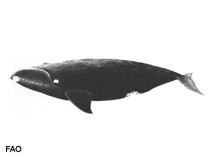
Mammalia |
Cetartiodactyla |
Balaenidae
Entorno: milieu / zona climática / rango de profundidad / gama de distribución
Ecología
Pelágico. Tropical; 0°N - 90°S, 180°W - 180°E
Southern hemisphere: Antarctic to temperate waters; occasionally along the northern part of the Antarctic Peninsula. [Chile-Peru population: IUCN 2010 (Ref. 84930): CR, D.]
Longitud en la primera madurez / Tamaño / Peso / Edad
Madurez: Lm ? range ? - ? cm Max length : 1,700 cm TL macho / no sexado; (Referencia 1394); peso máximo publicado: 100.0 t (Referencia 1394)
Inhabits oceanic regions. It preys on copepods and krill, particularly on the surface or subsurface skim feeding. Southern right whale populations, like their northern counterparts, have been heavily depleted by commercial whaling. Although not as endangered as the northern’ species, southern right whale populations are still relatively small. Although fully protected by the IWC, there is probably still some hunting for right whales. Despite the threats from whaling, entanglement in fishing gear, vessel collisions, and habitat destruction, some southern right whale populations have shown recent signs of recovery (Ref. 1394). Surface and subsurface skim feeding. Feeds on copepods and krill, apparently sometimes feeding near the bottom (Ref. 1394).
Ciclo vital y comportamiento de apareamiento
Madurez | Reproducción | Puesta | Huevos | Fecundidad | Larva
Jefferson, T.A., S. Leatherwood and M.A. Webber 1993 FAO species Identification Guide: Marine Mammals of the World. Rome, FAO. 320 p. + 587 figures. (Referencia 1394)
Situación en la Lista Roja de la UICN
(Referencia 130435: Version 2025-2 (Global))
Estatus CITES (Referencia 108899)
CMS (Referencia 116361)
Amenaza para el ser humano
Usos humanos
Pesquerías: comercial
FAO - pesquerías: perfil de la especie, landings search; Publication: search | FishSource | Sea Around Us
Herramientas
Más información
Ecología TróficaAlimentos (presas)
Composición de la dieta
consumo de alimento
Despredadores
Dinámica de la poblaciónCrecimientoEdades / tallas máximasLongitud-peso rel.Longitud-longitud rel.Longitud-frecuenciasConversión de masasAbundancia FisiologíaConsumo del oxígeno
Relacionados con el ser humanoSellos, monedas, varios
Fuentes de Internet
Estimaciones basadas en modelos
Vulnerabilidad pesquera
(Referencia 71543) |
Very high vulnerability (90 of 100). |
Categoría de precios
(Referencia 80766): |
Unknown. |