Polychaeta |
Phyllodocida |
Nereididae
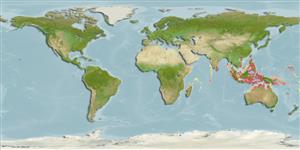
البيئة: الوسط / المنطقة المناخية / نطاق العمق / نطاق التوزيع
البيئة
Benthic. Tropical
Indo-Pacific: Red Sea, Sri Lanka, India and Philippines.
الطول عند النضج الأول / الحجم / وزن / العمر
النضج: Lm ? range ? - ? cm Max length : 2.5 cm BL ذكر/ مختلط الجنس; (مرجع 80356)
Found in shallow waters (Ref. 80356). Probably omnivores and scavengers as some species have been observed feeding on algae while others feed on invertebrates (e.g. ascidians) and carrion (Ref. 107862).
دورة الحياة وسلوك التزاوج
النضج | التكاثر | وضع البيض | بيض | الخصوبة | اليرقات
Members of the class Polychaeta are mostly gonochoric (sexual). Mating: Females produce a pheromone attracting and signalling the males to shed sperm which in turn stimulates females to shed eggs, this behavior is known as swarming. Gametes are spawned through the metanephridia or body wall rupturing (termed as "epitoky", wherein a pelagic, reproductive individual, "epitoke", is formed from a benthic, nonreproductive individual, "atoke"). After fertilization, most eggs become planktonic; although some are retained in the worm tubes or burrowed in jelly masses attached to the tubes (egg brooders). Life Cycle: Eggs develop into trocophore larva, which later metamorph into juvenile stage (body lengthened), and later develop into adults.
Rosito, R.M. 1983 Polychaeta from shallow waters off Mactan, Cebu, Part II. The Philippine Scientist 20(1983):11-38. (مرجع 80356)
حالة القائمة الحمراء للاتحاد الدولي لحفظ الطبيعة والموارد الطبيعية
(مرجع 130435: Version 2025-2 (Global))
حالته حسب اتفاقية سايتس (مرجع 108899)
Not Evaluated
Not Evaluated
خطر للأنسان
Harmless
استخدامات بشرية
FAO - Publication: search | FishSource |
أدوات
مزيد من المعلومات
علم البيئة الغذائيةالمواد الغذائية (الفرائس)
التركيبة الغذائية
استهلاك الأغذية
مفتريسات
دورة الحياةالتكاثرالنضجالخصوبةوضع البيضبيضتطور البيضةاليرقات علم وظائف الأعضاءاستهلاك الأوكسجين
ذات الصلة بالبشرطوابع بريدية وعملات معدنية ومتنوعة
مصادر علي الأنترنت
تقديرات تستند إلى النماذج
ضعف الصيد
(مرجع 71543) |
Low vulnerability (10 of 100). |