Bivalvia |
Pectinida |
Spondylidae
環境:環境 / 気候帯 / 深さの範囲 / 分布範囲
生態学
Benthic; 深さの範囲 0 - 25 m (参照 348). Tropical
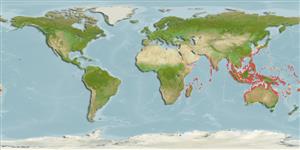
Indo-West Pacific: from East Africa, including the Red Sea, to eastern Indonesia; north to Japan and south to northern Queensland.
初回成熟時の長さ / サイズ / 重さ / 年齢
成熟: Lm ? range ? - ? cm Max length : 14.0 cm SHH オス/雌雄の選別がない; (参照 348); common length : 10.0 cm SHH オス/雌雄の選別がない; (参照 348)
Usually found near coral reefs (Ref. 799).
ライフサイクルと交尾行動
成熟 | 繁殖 | 放精 | 卵 | 生産力 | 幼生
Members of the class Bivalvia are mostly gonochoric, some are protandric hermaphrodites. Life cycle: Embryos develop into free-swimming trocophore larvae, succeeded by the bivalve veliger, resembling a miniature clam.
主な参考文献
参考文献 | コーディネーター | 協力者
Poutiers, J.M. 1998 Bivalves. Acephala, Lamellibranchia, Pelecypoda. p. 123-362. In Carpenter, K. E. and V. H. Niem. 1998. FAO species identification guide for fishery purposes. The living marine resources of the Western Central Pacific. Volume 1. Seaweeds, corals, bivalves, and gastropods. Rome, FAO. (参照 348)
IUCNのレッドリストの状況は
(参照 130435: Version 2025-2 (Global))
ワシントン条約ステータス (参照 108899)
Not Evaluated
Not Evaluated
人間に対する脅威
Harmless
人間の用途
水産業: 商業
FAO - Publication: search | FishSource |
用具
インターネットの情報源
モデルに基づく推定値
漁業の脆弱性
(参照 71543) |
Low vulnerability (10 of 100). |
価格帯
(参照 80766): |
Unknown. |