Echinoidea |
Diadematoida |
Diadematidae
Environnement : milieu / zone climatique / profondeur / gamme de distribution
Écologie
Benthic; profondeur 0 - 90 m (Réf. 81020). Tropical
Indo-Pacific: from Indian Ocean Tahiti and from Japan to South Pacific Islands.
Longueur à la première maturité / Taille / Poids / Âge
Maturité: Lm ? range ? - ? cm Max length : 15.0 cm WD mâle / non sexé; (Réf. 800)
Description synthétique
Morphologie
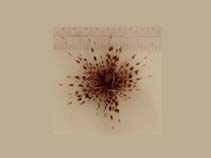
Reported to have the broadest range of color morphs in the family Diadematidae (Ref. 2932). Most common color morphs throughout Indo-Pacific were the white (inerambulacral spines) and brown (test and ambulacral spines) and the completely brown color morph (Ref. 2929).
Inhabits shallow coral and coral rubble areas at depths of 1 to 40 m (Ref. 800). Feeds on algae (Ref. 2938).
Cycle de vie et comportement reproducteur
Maturité | Reproduction | Frai | Œufs | Fécondité | Larves
Members of the class Echinoidea are gonochoric. Fertilization is external. Brooding is common, eggs are held either on the peristome, around the periproct or deep into the concavities on the petaloids. Life cycle: Embryos develop into planktotrophic larvae (echinoplateus) and live for several months before they sink to the bottom using their tube feet to adhere on the ground where they metamorphose into young urchins.
Schoppe, S. 2000 A guide to common shallow water sea stars, brittle stars, sea urchins, sea cucumbers and feather stars (echinoderms) of the Philippines. Times Media Private Limited, Singapore. 144 p. (Réf. 800)
Statut dans la liste rouge de l'IUCN
(Réf. 130435: Version 2025-2 (Global))
statut CITES (Réf. 108899)
Not Evaluated
Not Evaluated
Menace pour l'homme
Harmless
Utilisations par l'homme
Pêcheries: commercial
FAO - Publication: search | FishSource | Sea Around Us
Outils
Plus d'informations
Dynamique des populationsCroissanceÂges / tailles maximalesLongueur-poids rel.Rel. longueur-longueur.Fréquences de longueursConversion de masseAbondance Cycle de vieReproductionMaturitéFéconditéFraiŒufsDéveloppement de l'œufLarves PhysiologieConsommation d'oxygène
Liées à l'hommeTimbres, pièces de monnaie, divers
Sources Internet
Estimations basées sur des modèles
Vulnérabilité de la pêche
(Réf. 71543) |
Low vulnerability (10 of 100). |
Catégorie de prix
(Réf. 80766): |
Unknown. |
Nutrients
|
Calcium = 126 [75, 177] mg/100g; Iron = 5.08 [1.67, 7.92] mg/100g; Protein = 12%; Omega3 = 0.331 [0.263, 0.400] g/100g; Selenium = 0.04 [48.48, 67.17] μg/100g; VitaminA = 0 μg/100g; Zinc = 1.97 [0.92, 3.02] mg/100g (wet weight); based on nutrient studies. |