Cephalopoda |
Octopoda |
Octopodidae
ສະພາບແວດລ້ອມ: ສະພາບແວດລ້ອມ / ເຂດດິນຟ້າອາກາດ / ລະດັບຄວາມເລິກ / ຂອບເຂດການແຈກຢາຍ
ນິເວດວິທະຍາ
Benthic; ລະດັບຄວາມເລິກ 0 - 37 m (ເອກະສານອ້າງອີງ 96968). Tropical
Indo-West Pacific.
ຄວາມຍາວໃນການເຕີບໂຕເຕັມຄັ້ງທໍາອິດ / ຂະໜາດ / ນ້ຳໜັກ / ອາຍຸ
ການຈະເລີນເຕັມໄວ: Lm ? range ? - ? cm Max length : 48.0 cm TL ຕົວຜູ້/ບໍ່ມີເພດ; (ເອກະສານອ້າງອີງ 96968)
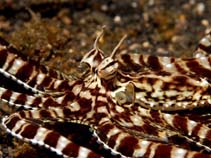
Mantle length is 5.8 cm. Species is known for its mimicry of toxic models that co-occur in the same habitat, namely banded soles, sea snakes, and lionfish, with other distinct postures and behaviors currently being open to interpretation (Ref. 96968). This octopus often occupies the vacated burrows of other animals. These lairs appear temporary or may form a network of regular lairs within a home range. Individuals were observed to occupy a particular hole for periods of between one to four days. Some individuals were observed to leave one hole at first light, forage throughout the day (including entering and exiting from various animal burrows throughout the day) and remain overnight within the last hole encountered during foraging bouts. These animals were observed to emerge from the same hole at first light the next day (Ref. 96968). Active during the day. Feeds on crustaceans and fishes (Ref. 7940).
ວົງຈອນຊີວິດ ແລະພຶດຕິກໍາການຫາຄູ່
ການຈະເລີນເຕັມໄວ | ການສືບພັນ | ການວາງໄຂ່ | ໄຂ່ | ຄວາມດົກຂອງໄຂ່ປາ | ຕົວອ່ອນ
Members of the class Cephalopoda are gonochoric. Male and female adults usually die shortly after spawning and brooding, respectively. Mating behavior: Males perform various displays to attract potential females for copulation. During copulation, male grasp the female and inserts the hectocotylus into the female's mantle cavity where fertilization usually occurs. Life cycle: Embryos hatch into planktonic stage and live for some time before they grow larger and take up a benthic existence as adults.
Norman, M.D. and F.G. Hochberg 2005 The "mimic octopus" (Thaumoctopus mimicus n. gen. et sp.), a new octopus from the tropical Indo-west Pacific (Cephalopoda: Octopodidae). Molluscan Research 25(2):57-70. (ເອກະສານອ້າງອີງ 7940)
ສະຖານະພາບບັນຊີແດງຂອງ IUCN
(ເອກະສານອ້າງອີງ 130435: Version 2025-2 (Global))
ສະຖານະ CITES (ເອກະສານອ້າງອີງ 108899)
Not Evaluated
CMS (ເອກະສານອ້າງອີງ 116361)
Not Evaluated
ໄພຂົ່ມຂູ່ຕໍ່ມະນຸດ
Harmless
ການນໍາໃຊ້ຂອງມະນຸດ
FAO - Publication: search | FishSource |
ເຄື່ອງມື
ຂໍ້ມູນຕື່ມອີກ
ນະໂຍບາຍດ້ານປະຊາກອນການເຕີບໃຫຍ່
ສູງສຸດ. ອາຍຸ / ຂະຫນາດ
ຄວາມຍາວ-ນ້ໍາຫນັກ rel.
ຄວາມຍາວ - ຄວາມຍາວ rel.
ຄວາມຖີ່ຄວາມຍາວ
ການແປງມະຫາຊົນ
ຄວາມອຸດົມສົມບູນ
ວົງຈອນຊີວິດການສືບພັນການຈະເລີນເຕັມໄວຄວາມດົກຂອງໄຂ່ປາການວາງໄຂ່ໄຂ່ການພັດທະນາໄຂ່ຕົວອ່ອນ ຟີຊິກສາດການບໍລິໂພກອົກຊີເຈນ
ມະນຸດທີ່ກ່ຽວຂ້ອງສະແຕມ, ຫຼຽນ, ອື່ນໆ.
ແຫຼ່ງອີນເຕີເນັດ
ການຄາດຄະເນໂດຍອີງໃສ່ແບບຈໍາລອງ
ຄວາມສ່ຽງຕໍ່ການຫາປາ
(ເອກະສານອ້າງອີງ 71543) |
Moderate vulnerability (38 of 100). |