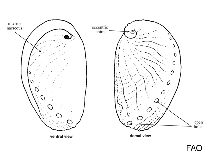
Gastropoda |
Lepetellida |
Haliotidae
পরিবেশ: পরিবেশ / জলবায়ু অঞ্চল / গভীরতার পরিসীমা / বিতরণ পরিসীমা
বাস্তুসংস্থান
Benthic; গভীরতার পরিসীমা 0 - 24 m (সূত্র 865). Subtropical; 8°C - 18°C (সূত্র 106839); 43°N - 27°N, 125°W - 114°W (সূত্র 106839)
Eastern Pacific: from Oregon, USA to Bahia Tortugas, Mexico. Introduced in the northeast Atlantic, southeast and western Pacific, Hawaii, and South Africa. Subtropical to temperate.
প্রথম পরিপক্কতার সময় দৈর্ঘ্য / আকৃতি / ওজন / বয়স
পরিপক্কতা : Lm 4.0 range ? - ? cm Max length : 26.0 cm SHL পুরুষ/ লিঙ্গ অনিধর্ারিত ; (সূত্র 95344)
It moves across sand and gravel bottoms, from low intertidal to 24 meters in depth (Ref. 865). Predominantly found in or in near rocky macroalgal substrata (Ref. 106839). Feeds on algae (Ref. 105211).
Broadcast spawners. Life cycle: Embryos develop into planktonic trocophore larvae and later into juvenile veligers before becoming fully grown adults (Ref. 833).
Bisby, F.A., M.A. Ruggiero, K.L. Wilson, M. Cachuela-Palacio, S.W. Kimani, Y.R. Roskov, A. Soulier-Perkins and J. van Hertum 2005 Species 2000 & ITIS Catalogue of Life: 2005 Annual Checklist. CD-ROM; Species 2000: Reading, U.K. (সূত্র 19)
আইইউসিএন রেড লিস্টের অবস্থা
(সূত্র 130435: Version 2025-2 (Global))
CITES অবস্থা (সূত্র 108899)
Not Evaluated
Not Evaluated
মানুষের জন্য হুমকি
মানুষের ব্যবহার
মৎস্য: বাণিজ্যিক
FAO - Aquaculture Systems: production search; Publication: search | FishSource | আমাদের চতুর্পাশ্বের সাগর
হাতিয়ার
আরো তথ্য
শারীরবিদ্যাঅম্লজান ব্যবহার
মানব সম্পর্কিতডাকটিকিট, মুদ্রা, বিবিধ।
ইন্টারনেট সুত্র
মডেলের উপর ভিত্তি করে অনুমান
স্থিতিস্থাপক
(Ref. 69278): |
মাধ্যম , সর্বনিম্ন প্রজন দ্বিগুনের সময় ১.৪-৪.৪ বৎসর (K=0.11-0.32) |
মাছ ধরার ঝুঁকিপূর্ণতা
(সূত্র 71543) |
Moderate vulnerability (39 of 100). |
মূল্য বিভাগ
(সূত্র 80766): |
Very high. |
Nutrients
|
Calcium = 126 [75, 177] mg/100g; Iron = 4.79 [1.67, 7.92] mg/100g; Protein = 15.9 [14.8, 16.9] %; Omega3 = 0.331 [0.263, 0.400] g/100g; Selenium = 57.8 [48.5, 67.2] μg/100g; VitaminA = 0 μg/100g; Zinc = 1.97 [0.92, 3.02] mg/100g (wet weight); based on nutrient studies. |