Malacostraca |
Decapoda |
Upogebiidae
محیط زیست: محیط زیست / منطقه آب و هوایی / تغييرات عمق / محدوده توزیع
بوم شناسي
Benthic; لب شور; تغييرات عمق 0 - 1 m (مرجع 4). Temperate, preferred 9°C (مرجع 107945); 62°N - 35°N, 152°W - 120°W (مرجع 4)
Eastern Pacific: Prince William Sound, Alaska to Morro Bay, California, USA.
طول در اولین بلوغ / اندازه / وزن / سن
بلوغ: Lm ? range ? - ? cm Max length : 15.0 cm TL جنس نر / بدون خواص جنسي; (مرجع 4); 10.5 cm TL (female)
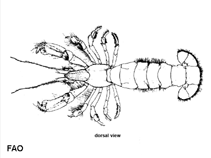
Rostrum ending in three teeth, the median tooth broad and triangular, the lateral teeth much shorter. A groove between the median and lateral teeth, also a very shallow median longitudinal groove. Lower surface of rostrum without spines. Anterolateral border of carapace with a very small tooth at the level of the eye. First pereiopods subchelate. Dactylus of adult male on inner surface with a longitudinal row of 6-12 tubercles, that are placed close together. Carpus with some anterior spines. Merus with a subdistal anterodorsal spine (Ref. 4).
It has lengths of 11 cm, total body length (Ref. 259); 15 cm (males) and 10.5 cm (females), total length (Refs. 4, 258). It burrows in muddy sand of the intertidal zone, sometimes under rocks; burrows are Y-shaped, and about 0.6 to 1 m deep (Ref. 4). Found in bays and estuaries (Ref. 112892).
Members of the order Decapoda are mostly gonochoric. Mating behavior: Precopulatory courtship ritual is common (through olfactory and tactile cues); usually indirect sperm transfer.
مآخذ اصلی
مراجع | هماهنگ كننده | همكاران
Holthuis, L.B. 1991 FAO Species Catalogue. Vol. 13. Marine lobsters of the world. An annotated and illustrated catalogue of species of interest to fisheries known to date. FAO Fish. Synop. 125(13):292p. Rome: FAO. (مرجع 4)
وضعيت در فهرست قرمز IUCN
(مرجع 130435: Version 2025-2 (Global))
وضعيت از نظر سايتس (مرجع 108899)
Not Evaluated
Not Evaluated
خطر برای انسان ها
استفاده انسانی
ماهي گيري – شيلات: تجاري; طعمه: occasionally
FAO - ماهي گيري – شيلات: landings search; Publication: search | FishSource | دریای اطراف ما
ابزارها
اطلاعات بيشتر
پویایی جمعیترشد
حداکثر سن/اندازه
نسبت طول-وزن.
طول-طول نسبی.
نوسانات طولی
تبدیل انبوه
فراواني
مرتبط با انسانتمبر، سکه، متفرقه.
منابع اينترنتي
تخمینها بر اساس مدلها
آسیبپذیری ماهیگیری
(مرجع 71543) |
Low vulnerability (10 of 100). |
آسیبپذیری اقلیمی
(مرجع 125649) |
High to very high vulnerability (71 of 100) |
طبقه قيمت
(مرجع 80766): |
Very high. |
Nutrients
|
Calcium = 109 [35, 184] mg/100g; Iron = 1.59 [1.21, 1.97] mg/100g; Protein = 20.2 [19.2, 21.3] %; Omega3 = 0.285 [0.185, 0.386] g/100g; Selenium = 48.3 [-31.7, 128.3] μg/100g; VitaminA = 0 μg/100g; Zinc = 1.79 [1.17, 2.40] mg/100g (wet weight); based on nutrient studies. |