Malacostraca |
Decapoda |
Munididae
Milieu: milieu / Klimaatzone / Diepte / verspreidingsgebied
Ecologie
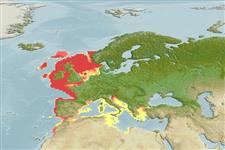
Benthic; diepte 30 - 300 m (Ref. 79413). Temperate; 63°N - 30°N, 18°W - 31°E
Eastern Atlantic and the Mediterranean: From Shetland to Sognefjord, Norway in the north to Madeira Is. and the Mediterranean.
Lengte bij maturiteit / Grootte / Gewicht / Leeftijd
Maturiteit: Lm 1.0, range 2 - ? cm
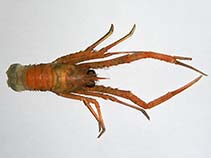
Epibenthic (Ref. 87524). Inhabits sandy and muddy bottoms (Ref. 105214). Also found on rocky substrates in shelf waters from shallow to deeper continental slope (Ref. 105215) and on Serpula vermicularis reefs (Ref. 122978). In general, galatheid crabs show a wide spectrum of feeding habits, from being detritivorous, vegetarian, omnivorous, to cannibalistic (Ref. 90632).
Members of the order Decapoda are mostly gonochoric. Mating behavior: Precopulatory courtship ritual is common (through olfactory and tactile cues); usually indirect sperm transfer.
Jennings, S., J. Lancaster, A. Woolmer and J. Cotter 1999 Distribution, diversity and abundance of epibenthic fauna in the North Sea. Journal of the Marine Biological Association of the UK 79:385-399. (Ref. 3123)
Status op de Rode Lijst van het IUCN
(Ref. 130435: Version 2025-2 (Global))
CITES status (Ref. 108899)
Not Evaluated
Not Evaluated
Gevaar voor de mens
Gebruik door de mens
Visserij: commercieel
FAO - Publication: search | FishSource |
Tools
Meer informatie
Trofische ecologieVoedsel (prooien)DieetsamenstellingVoedselconsumptiePredatoren PopulatiedynamicaGroeiMax. leeftijden / matenLengte-gewicht rel.Lengte-lengte rel.LengtefrequentiesMassaconversieAbundantie FysiologieZuurstofverbruik
Menselijk gerelateerdPostzegels, munten, diversen.
Internetbronnen
Schattingen op basis van modellen
Weerstandsvermogen
(Ref. 69278): |
Hoog, minimale populatieverdubbelingstijd minder dan 15 maanden (Fec=6,000) |
Kwetsbaarheid van de visserij
(Ref. 71543) |
(0 of 100). |
Prijsklasse
(Ref. 80766): |
Very high. |