Bivalvia |
Venerida |
Cyrenidae
محیط زیست: محیط زیست / منطقه آب و هوایی / تغييرات عمق / محدوده توزیع
بوم شناسي
Benthic; لب شور; تغييرات عمق 0 - 2 m (مرجع 83435). Tropical; 37°N - 18°N, 97°W - 75°W
Western Atlantic: Virginia, USA to Campeche Mexico.
طول در اولین بلوغ / اندازه / وزن / سن
بلوغ: Lm ? range ? - ? cm Max length : 4.0 cm SHL جنس نر / بدون خواص جنسي; (مرجع 83435)
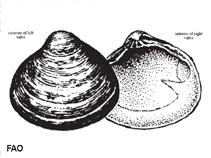
Shell outline subtriangular, as high as long, inflated, heavy. Shell smooth, sculpture absent. Hinge with three cardinal teeth situated under umbo; 1 anterior and 1 posterior lateral tooth. Ligament long, narrow. Periostracum with minute scales, fuzzy, thin. Colour: externally dull white, internally white rarely stained with purple; periostracum glossy brown (Ref. 344).
It has a total length of 3.5 cm. Fisheries: It is consumed locally boiled, restrictions due to habitat degradation hamper exploitation in parts of area (Ref. 344). It is infaunal in mud or sandy mud in estuaries, mangrove swamps, and coastal lagoons (Ref. 344). Occurs in intertidal areas and in relatively small numbers in shallow nearshore areas (Ref. 104487).
چرخه زندگی و رفتار جفتگیری
بلوغ | تولید مثل | تخم ریزی | تخم ها | باروری | توزاد ( لارو)
Members of the class Bivalvia are mostly gonochoric, some are protandric hermaphrodites. Life cycle: Embryos develop into free-swimming trocophore larvae, succeeded by the bivalve veliger, resembling a miniature clam.
مآخذ اصلی
مراجع | هماهنگ كننده | همكاران
Leal, J.H. 2003 Bivalves. p. 25-98. In Carpenter, K.E. (ed.). The living marine resources of the Western Central Atlantic. Volume 1: Introduction, molluscs, crustaceans, hagfishes, sharks, batoid fishes, and chimaeras. FAO Species Identification Guide for Fishery Purposes and American Society of Ichthyologists and Herpetologists Special Publication No. 5. 1600p. (مرجع 344)
وضعيت در فهرست قرمز IUCN
(مرجع 130435: Version 2025-2 (Global))
وضعيت از نظر سايتس (مرجع 108899)
Not Evaluated
Not Evaluated
خطر برای انسان ها
استفاده انسانی
ماهي گيري – شيلات: تجاري
FAO - Publication: search | FishSource |
ابزارها
اطلاعات بيشتر
بومشناسی گرمسیریاقلام غذایی (طعمهها)
تركيب غذايي
مصرف غذايي
شکارچیان
پویایی جمعیترشد
حداکثر سن/اندازه
نسبت طول-وزن.
طول-طول نسبی.
نوسانات طولی
تبدیل انبوه
فراواني
مرتبط با انسانتمبر، سکه، متفرقه.
منابع اينترنتي
تخمینها بر اساس مدلها
آسیبپذیری ماهیگیری
(مرجع 71543) |
Low vulnerability (10 of 100). |
طبقه قيمت
(مرجع 80766): |
Unknown. |