Pycnogonida |
Pantopoda |
Callipallenidae
Entorno: milieu / zona climática / rango de profundidad / gama de distribución
Ecología
Benthic; rango de profundidad 27 - 55 m (Referencia 2115). Tropical
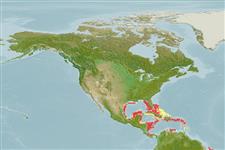
Western Central Atlantic and Indo-West Pacific.
Longitud en la primera madurez / Tamaño / Peso / Edad
Madurez: Lm ? range ? - ? cm
Trunk slender, long; neck very long, with few short spines at insertion of chelifores and proboscis. Cephalic segment longer than posterior 3 segments combined; glabrous lateral processes short, little longer than their diameters. Ocular tubercle low, apex with slender, anterior-pointing tubercle; eyes large. Proboscis short, with setose oral fringe. Abdomen short, erect, with 2 short lateral setae. Chelifores short; scapes with 1 long endal spine, several short ectal spines; chelae palms short, rounded, setose; fingers short, with several teeth. Palps lacking. Oviger long; fourth, fifth segments longest, subequal. Strigilis well developed, with denticulate spines and terminal claw. Legs very long, slender, lightly setose; second tibiae longest; propodus straight, with serrate heel spines matching those of tarsus and second tibia; claw robust; auxiliaries more than half main claw length (Ref. 2115, p. 61-62).
Ciclo vital y comportamiento de apareamiento
Madurez | Reproducción | Puesta | Huevos | Fecundidad | Larva
Members of the class Pycnogonida are gonochoric and sexually dimorphic. During copulation, male usually suspends itself beneath the female. Fertilization occurs as the eggs leave the female's ovigers. Males brood the egg masses until they hatch. Life cycle: Eggs hatch into protonymphon larva then to adults.
King, P.E. 1973 Pycnogonids. Hutchinson of London. London, UK. 144 p. (Referencia 12)
Situación en la Lista Roja de la UICN
(Referencia 130435: Version 2025-2 (Global))
Estatus CITES (Referencia 108899)
Not Evaluated
CMS (Referencia 116361)
Not Evaluated
Amenaza para el ser humano
Usos humanos
FAO - Publication: search | FishSource |
Herramientas
Más información
Ecología TróficaAlimentos (presas)
Composición de la dieta
consumo de alimento
Despredadores
Dinámica de la poblaciónCrecimiento
Edades / tallas máximas
Longitud-peso rel.
Longitud-longitud rel.
Longitud-frecuencias
Conversión de masas
Abundancia
Ciclo de vidaReproducciónMadurezFecundidadPuestaHuevosDesarrollo de los huevosLarva FisiologíaConsumo del oxígeno
Relacionados con el ser humanoSellos, monedas, varios
Fuentes de Internet
Estimaciones basadas en modelos
Vulnerabilidad pesquera
(Referencia 71543) |
(0 of 100). |
Categoría de precios
(Referencia 80766): |
Unknown. |