Cephalopoda |
Myopsida |
Loliginidae
محیط زیست: محیط زیست / منطقه آب و هوایی / تغييرات عمق / محدوده توزیع
بوم شناسي
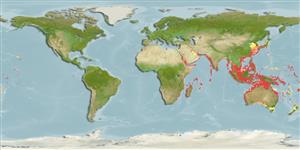
نزديك كف زي; لب شور; تغييرات عمق 0 - 100 m (مرجع 275). Tropical; 51°N - 48°S, 22°E - 155°W (مرجع 106950)
Indo-Pacific: from Japan to Australia and New Zealand coasts, from Hawaii to the East African coast, north to Red Sea and south to Madagascar. Introduced in the Mediterranean Sea.
طول در اولین بلوغ / اندازه / وزن / سن
بلوغ: Lm ? range ? - ? cm Max length : 40.1 cm ML جنس نر / بدون خواص جنسي; (مرجع 121859); بيشينه وزن گزارش شده: 1.80 g (مرجع 275)
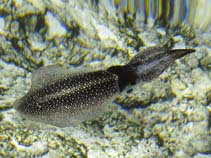
Also caught by set nets and spears and jigs. Demersal neritic species (Ref. 105081). Inhabits warm coastal waters (Ref. 101164). Found among rock reefs, seaweeds and estuaries (Ref. 105081). Primarily active at night and is found in shallow waters, from 0 to 100 m in depth. Moves to deeper waters or in proximity to floating driftwood, reefs, rocks, or seagrasses during daylight (Also Ref. 129713). Often solitary (Ref. 101164). Voracious (Ref. 101165) and strictly carnivorous predator (Refs. 101164, 129713). Mainly consumes mollusks, fishes (Ref. 101164) and prawns (Ref. 101165). Utilizes its characteristic tentacles to catch live prey (Ref. 101164). Exhibits cannibalism on smaller conspecifics (Ref. 101164) or among size classes (Ref. 101165).
چرخه زندگی و رفتار جفتگیری
بلوغ | تولید مثل | تخم ریزی | تخم ها | باروری | توزاد ( لارو)
Members of the class Cephalopoda are gonochoric. Male and female adults usually die shortly after spawning and brooding, respectively. Mating behavior: Males perform various displays to attract potential females for copulation. During copulation, male grasp the female and inserts the hectocotylus into the female's mantle cavity where fertilization usually occurs. Life cycle: Embryos hatch into planktonic stage and live for some time before they grow larger and take up a benthic existence as adults.
مآخذ اصلی
مراجع | هماهنگ كننده | همكاران
Roper, C.F.E., M.J. Sweeney and C.E. Nauen 1984 FAO Species Catalogue. Vol. 3. Cephalopods of the world. An annotated and illustrated catalogue of species of interest to fisheries. FAO Fish. Synop. 125(3):277p. Rome: FAO. (مرجع 275)
وضعيت در فهرست قرمز IUCN
(مرجع 130435: Version 2025-2 (Global))
وضعيت از نظر سايتس (مرجع 108899)
Not Evaluated
Not Evaluated
خطر برای انسان ها
استفاده انسانی
ماهي گيري – شيلات: تجاري
FAO - ماهي گيري – شيلات: landings search; Publication: search | FishSource | دریای اطراف ما
ابزارها
اطلاعات بيشتر
چرخه زندگیتولید مثلبلوغباروریتخم ریزیتخم هانمو تخمتوزاد ( لارو) مرتبط با انسانتمبر، سکه، متفرقه.
منابع اينترنتي
تخمینها بر اساس مدلها
جهندگی
(Ref. 69278): |
زياد, كمينه زمان لازم براي دو برابر شدن جمعيت ، كمتر از 15 ماه (K=0.73-1.25) |
آسیبپذیری ماهیگیری
(مرجع 71543) |
Low vulnerability (19 of 100). |
طبقه قيمت
(مرجع 80766): |
Very high. |
Nutrients
|
Calcium = 126 [75, 177] mg/100g; Iron = 4.79 [1.67, 7.92] mg/100g; Protein = 15.5 [13.7, 17.4] %; Omega3 = 0.414 [0.262, 0.566] g/100g; Selenium = 57.8 [48.5, 67.2] μg/100g; VitaminA = 0 μg/100g; Zinc = 1.97 [0.92, 3.02] mg/100g (wet weight); based on nutrient studies. |