Polyplacophora |
Chitonida |
Mopaliidae
Milieu: milieu / Klimaatzone / Diepte / verspreidingsgebied
Ecologie
Benthic; diepte 0 - 100 m (Ref. 289). Temperate
Northeast Pacific, Atlantic ocean and Arctic Ocean: Alaska and USA. Temperate to polar.
Lengte bij maturiteit / Grootte / Gewicht / Leeftijd
Maturiteit: Lm ? range ? - ? cm Max length : 6.0 cm TL mannelijk / geslacht onbekend; (Ref. 289)
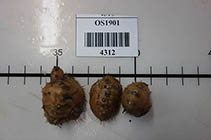
Depth: Intertidal to 100 m. Habitat: On rocks (Ref. 289). Body: Oval; with the valves nearly covered by a brown skin continued upward from the girdle, but their outlines are plainly visible through this integument. Small exposed portion of each median valve: Broadly heart-shaped and situated at the posterior margin of each valve; it is sculptured with strong concentric grooves and a more or less distinct granulation. Girdle: Thin, smooth with sparsely scattered small bunches of hairs (Ref. 297). Known to occur on bathyal, infralittoral and circalittoral of the Gulf and estuary (Ref. 87872).
Levenscyclus en paargedrag
Maturiteit | Voortplanting | Paaien | Eieren | Fecunditeit | Larven
Sexes are separate but they are indistinguishable externally. Fertilization is external and usually the eggs are shed into the water.
Burghardt, G. and L. Burghardt 2006 West Coast Chitons. A Gallery of Worlwide Chitons: http://home.inreach.com/burghart/wcoast.html[accessed20/01/06] (Ref. 296)
Status op de Rode Lijst van het IUCN
(Ref. 130435: Version 2025-2 (Global))
CITES status (Ref. 108899)
Not Evaluated
Not Evaluated
Gevaar voor de mens
Gebruik door de mens
FAO - Publication: search | FishSource |
Tools
Meer informatie
Trofische ecologieVoedsel (prooien)
Dieetsamenstelling
Voedselconsumptie
Predatoren
PopulatiedynamicaGroei
Max. leeftijden / maten
Lengte-gewicht rel.
Lengte-lengte rel.
Lengtefrequenties
Massaconversie
Abundantie
LevenscyclusVoortplantingMaturiteitFecunditeitPaaienEierenOntwikkeling van de eierenLarven FysiologieZuurstofverbruik
Menselijk gerelateerdPostzegels, munten, diversen.
Internetbronnen
Schattingen op basis van modellen
Kwetsbaarheid van de visserij
(Ref. 71543) |
Low vulnerability (10 of 100). |
Prijsklasse
(Ref. 80766): |
Unknown. |