Gastropoda |
Nudibranchia |
Discodorididae
Environnement : milieu / zone climatique / profondeur / gamme de distribution
Écologie
Benthic; profondeur 0 - 229 m (Réf. 822). Subtropical
Eastern Pacific. Tropical to temperate.
Longueur à la première maturité / Taille / Poids / Âge
Maturité: Lm ? range ? - ? cm Max length : 20.0 cm TL mâle / non sexé; (Réf. 822); common length : 8.0 cm TL mâle / non sexé; (Réf. 312)
Description synthétique
Morphologie
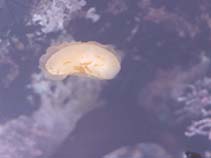
Body is oval. Coarse bumps called tubercles cover the body. It is orange-yellow to light yellow with dark brown to black blotches between bumps on its back. Gill plume is white and near the rear end. It has a fruity odor that seems to discourage predators.
Assumed maximum length from Ref. 822. Habitat: Found in the low intertidal to subtidal zone. Diet: sponges and detritus (Ref. 312).
Cycle de vie et comportement reproducteur
Maturité | Reproduction | Frai | Œufs | Fécondité | Larves
Members of the order Nudibranchia are simultaneous hermaphrodites. Mating behavior: Both individuals darts their penis toward each other to induce one to act as a male and the other as the female. The victorious one to penetrate the body wall is the dominant male. Life cycle: Eggs are deposited on a substratum where they develop and hatch into (planktonic) vestigial veliger larval stage and further grow as adults.
Gallivan, G. and J. Danforth 1999 Phylum Mollusca. Marine Science Institute. (Réf. 312)
Statut dans la liste rouge de l'IUCN
(Réf. 130435: Version 2025-2 (Global))
statut CITES (Réf. 108899)
Not Evaluated
Not Evaluated
Menace pour l'homme
Utilisations par l'homme
FAO - Publication: search | FishSource |
Outils
Plus d'informations
Écologie trophiqueAliments (proies)
Composition du régime alimentaire
Consommation alimentaire
Prédateurs
Dynamique des populationsCroissance
Âges / tailles maximales
Longueur-poids rel.
Rel. longueur-longueur.
Fréquences de longueurs
Conversion de masse
Abondance
Cycle de vieReproductionMaturitéFéconditéFraiŒufsDéveloppement de l'œufLarves PhysiologieConsommation d'oxygène
Liées à l'hommeTimbres, pièces de monnaie, divers
Sources Internet
Estimations basées sur des modèles
Vulnérabilité de la pêche
(Réf. 71543) |
Low vulnerability (10 of 100). |
Catégorie de prix
(Réf. 80766): |
Unknown. |