Gastropoda |
Neogastropoda |
Melongenidae
Milieu: milieu / Klimaatzone / Diepte / verspreidingsgebied
Ecologie
Benthic; diepte 0 - 44 m (Ref. 83435). Tropical; 26°N - 5°N, 98°W - 52°W
Western Central Atlantic: Tamaulipas, Mexico to Cayenne, French Guiana.
Lengte bij maturiteit / Grootte / Gewicht / Leeftijd
Maturiteit: Lm ? range ? - ? cm Max length : 18.2 cm DL mannelijk / geslacht onbekend; (Ref. 83435); common length : 15.0 cm TL mannelijk / geslacht onbekend; (Ref. 355)
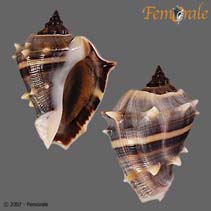
Shell thick, pear-shaped, with large body whorl. Spire short, last few whorls bear single or double rows of spines. Suture deeply channelled. Anterior canal short and broad. Base of shell sometimes with a row of smaller, blunt spines. Colour: purplish brown, light grey, or white, with bluish, brownish or greyish bands.
Inhabits coastal lagoons, mangroves, river estuaries, and other low-salinity environments (Ref. 355).
Levenscyclus en paargedrag
Maturiteit | Voortplanting | Paaien | Eieren | Fecunditeit | Larven
This species is a non-broadcast spawner. Life cycle does not include trocophore stage. Also Ref. 833.
Leal, J.H. 2003 Gastropods. p. 99-147. In Carpenter, K.E. (ed.). The living marine resources of the Western Central Atlantic. Volume 1: Introduction, molluscs, crustaceans, hagfishes, sharks, batoid fishes, and chimaeras. FAO Species Identification Guide for Fishery Purposes and American Society of Ichthyologists and Herpetologists Special Publication No. 5. 1600p. (Ref. 355)
Status op de Rode Lijst van het IUCN
(Ref. 130435: Version 2025-2 (Global))
CITES status (Ref. 108899)
Not Evaluated
Not Evaluated
Gevaar voor de mens
Harmless
Gebruik door de mens
Visserij: commercieel
FAO - Publication: search | FishSource |
Tools
Meer informatie
Trofische ecologieVoedsel (prooien)
Dieetsamenstelling
Voedselconsumptie
Predatoren
PopulatiedynamicaGroei
Max. leeftijden / maten
Lengte-gewicht rel.
Lengte-lengte rel.
Lengtefrequenties
Massaconversie
Abundantie
LevenscyclusVoortplantingMaturiteitFecunditeitPaaienEierenOntwikkeling van de eierenLarven FysiologieZuurstofverbruik
Menselijk gerelateerdPostzegels, munten, diversen.
Internetbronnen
Schattingen op basis van modellen
Kwetsbaarheid van de visserij
(Ref. 71543) |
Low vulnerability (10 of 100). |
Prijsklasse
(Ref. 80766): |
Unknown. |