Malacostraca |
Decapoda |
Portunidae
ສະພາບແວດລ້ອມ: ສະພາບແວດລ້ອມ / ເຂດດິນຟ້າອາກາດ / ລະດັບຄວາມເລິກ / ຂອບເຂດການແຈກຢາຍ
ນິເວດວິທະຍາ
Benthic; ລະດັບຄວາມເລິກ 5 - 118 m (ເອກະສານອ້າງອີງ 125642). Tropical; 33°N - 33°S, 29°E - 168°E
Indo-West Pacific: reaching Japan and Australia. Subtropical and tropical climates.
ຄວາມຍາວໃນການເຕີບໂຕເຕັມຄັ້ງທໍາອິດ / ຂະໜາດ / ນ້ຳໜັກ / ອາຍຸ
ການຈະເລີນເຕັມໄວ: Lm ?, range 5 - ? cm Max length : 20.0 cm CW ຕົວຜູ້/ບໍ່ມີເພດ; (ເອກະສານອ້າງອີງ 343)
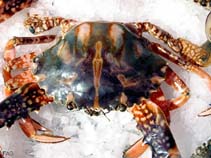
Carapace ovate; 5 distinct teeth on each anterolateral margin. Color: distinctive pattern of longitudinal stripes of maroon and white, usually with distinct white cross on median part of gastric region; legs and pincers with numerous scattered with white spots.
Especially important in markets in East Asia, where it commands substantially higher premium prices being sold for US$8 to US$15 per kg. Minimum depth range from Ref. 121712. Occurs at depths from 30 to 60 m, in sandy-muddy substrates, subtropical and tropical climates (Ref. 343). Usually occurs in sublittoral environment (Ref. 121718), on rocky intertidal (Ref. 104840) and stony coasts (Refs. 121712, 121718), including reef flats at depths of around 10-60 m (Ref. 121718). Also found in estuarine area (Ref. 108435) and offshore (Ref. 121719). Juveniles live in sandy coastal and intertidal habitats; adults are preferentially found in deeper muddy areas (Ref. 121720). Juveniles reported to be found symbiotic under bells of jellyfish (Ref. 125642).
Members of the order Decapoda are mostly gonochoric. Mating behavior: Precopulatory courtship ritual is common (through olfactory and tactile cues); usually indirect sperm transfer.
Ng, P.K.L. 1998 Crabs. p. 1045-1155. In K.E. Carpenter and V.H. Niem (eds) FAO species identification guide for fishery purposes. The living marine resources of the Western Central Pacific. Volume 2. Cephalopods, crustaceans, holothurians and sharks. Rome, FAO. 1998. pp. 687-1396. (ເອກະສານອ້າງອີງ 343)
ສະຖານະພາບບັນຊີແດງຂອງ IUCN
(ເອກະສານອ້າງອີງ 130435: Version 2025-2 (Global))
ສະຖານະ CITES (ເອກະສານອ້າງອີງ 108899)
Not Evaluated
CMS (ເອກະສານອ້າງອີງ 116361)
Not Evaluated
ໄພຂົ່ມຂູ່ຕໍ່ມະນຸດ
Harmless
ການນໍາໃຊ້ຂອງມະນຸດ
ການປະມົງ: ເປັນສີນຄ້າ
FAO - Publication: search | FishSource |
ເຄື່ອງມື
ຂໍ້ມູນຕື່ມອີກ
ນິເວດວິທະຍາເຂດຮ້ອນລາຍການອາຫານ (ຜູ້ຖືກລ້າ)ອົງປະກອບຂອງອາຫານການບໍລິໂພກອາຫານຜູ້ລ້າ ຟີຊິກສາດການບໍລິໂພກອົກຊີເຈນ
ມະນຸດທີ່ກ່ຽວຂ້ອງສະແຕມ, ຫຼຽນ, ອື່ນໆ.
ແຫຼ່ງອີນເຕີເນັດ
ການຄາດຄະເນໂດຍອີງໃສ່ແບບຈໍາລອງ
ຄວາມຢືດຢຸ່ນ
(Ref. 69278): |
ສູງ, ປະຊາກອນຕຳ່ສຸດທີ່ໃຊ້ເວລາສອງໜ້ອຍກວ່າ 15 ເດືອນ (K=0.63-1.8) |
ຄວາມສ່ຽງຕໍ່ການຫາປາ
(ເອກະສານອ້າງອີງ 71543) |
Low vulnerability (10 of 100). |
ປະເພດລາຄາ
(ເອກະສານອ້າງອີງ 80766): |
Unknown. |