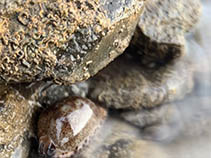
Gastropoda |
Littorinimorpha |
Cypraeidae
สิ่งแวดล้อม : สิ่งแวดล้อม / เขตภูมิอากาศ / ระดับความลึก / ระยะการกระจายสินค้า
นิเวศวิทยา
Benthic; ระดับความลึก ? - 10 m (อ้างอิง 126058). Tropical
Indo-Pacific.
ความยาวเมื่อครบกำหนดครั้งแรก / ขนาด / น้ำหนัก / อายุ
วัยเจริญพันธุ์: Lm ? range ? - ? cm Max length : 10.5 cm SHL เพศผู้/กระเทย; (อ้างอิง 349); common length : 8.0 cm SHL เพศผู้/กระเทย; (อ้างอิง 349)
Shell is smooth and shiny, with an elliptical to egg-like shape. Brown, with distinctive variable fine dark brown line patterns on the dorsal surface and black spots on the two sides. Ventral surface appears cream to gray. Aperture is long and narrow, without an operculum. Both upper and lower lips are lined with small teeth.
Collected for food by coastal populations in many areas. Shell used in shellcraft or sold for collections (Ref. 349). Found in coral reef and rocky habitats, common in shallow water and tide pools (Ref. 128042), under slabs and stones and in caverns of the outer edge of coral reefs. Inhabits well-aerated waters. Mainly nocturnal (Ref. 349). Members of the family Cypraeidae are primarily carnivores (Ref. 67623). Reported from Hong Kong to be found on the ceilings and walls of submarine caves (Ref. 126058).
วงจรชีวิตและพฤติกรรมการผสมพันธุ์
วัยเจริญพันธุ์ | การสืบพันธุ์ | การวางไข่ | เซลสืบพันธ์ของเพศเมีย(ไข่) | ความดกของไข่ | ตัวอ่อน
Members of the order Neotaenioglossa are mostly gonochoric and broadcast spawners. Life cycle: Embryos develop into planktonic trocophore larvae and later into juvenile veligers before becoming fully grown adults.
Poutiers, J.M. 1998 Gastropods. p. 363-648. In Carpenter, K. E. and V. H. Niem. 1998. FAO species identification guide for fishery purposes. The living marine resources of the Western Central Pacific. Volume 1. Seaweeds, corals, bivalves, and gastropods. Rome, FAO. (อ้างอิง 349)
สถานะบัญชีแดงของ IUCN
(อ้างอิง 130435: Version 2025-2 (Global))
สถานะไซเตส (อ้างอิง 108899)
Not Evaluated
CMS (อ้างอิง 116361)
Not Evaluated
ภัยคุกคามต่อมนุษย์
Harmless
การใช้ของมนุษย์
การประมง: การค้า
FAO - Publication: search | FishSource |
เครื่องมือ
ข้อมูลเพิ่มเติม
นิเวศวิทยาเขตร้อนรายการอาหาร (เหยื่อ)
องค์ประอบของอาหาร
การบริโภคอาหาร
ผู้ล่า
วงจรชีวิตการสืบพันธุ์วัยเจริญพันธุ์ความดกของไข่การวางไข่เซลสืบพันธ์ของเพศเมีย(ไข่)การพัฒนาไข่ตัวอ่อน เกี่ยวข้องกับมนุษย์แสตมป์ เหรียญ อื่นๆ
แหล่งที่มาจากอินเตอร์เน็ต
การประมาณค่าตามแบบจำลอง
ความเสี่ยงต่อการตกปลา
(อ้างอิง 71543) |
Low vulnerability (10 of 100). |
หมวดหมู่ราคา
(อ้างอิง 80766): |
Unknown. |