Malacostraca |
Decapoda |
Penaeidae
البيئة: الوسط / المنطقة المناخية / نطاق العمق / نطاق التوزيع
البيئة
Benthic; مياه مخلوطة; نطاق العمق 0 - 119 m (مرجع 356). Subtropical, preferred 24°C (مرجع 107945); 41°N - 18°N, 98°W - 73°W
Western Atlantic: from Tamaulipas and Yucatan, Mexico to Florida, north to New York, USA.
الطول عند النضج الأول / الحجم / وزن / العمر
النضج: Lm ?, range 17 - ? cm Max length : 22.4 cm TL ذكر/ مختلط الجنس; (مرجع 109188); 20 cm TL (female); العمر: 2.00 سنين (مرجع 109223)
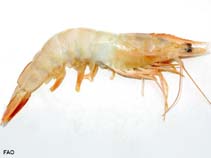
Maximum total length of unsexed and female from Ref. 88'>109188 and Ref. 8, respectively. Maximum standard length: 19.0 cm. Maximum depth from Ref. 108758. Occurs at depths from 2 to 90 m in bottom mud or peat with sand or clay in marine (adults) and estuarine (juveniles) environments. Temperate to tropical climates (Ref. 8). Migrates to deeper areas within estuaries as it grows. Juveniles are also found across vegetated marsh edge, oyster reefs, and oyster shell deposits and non-vegetated bottom (Ref. 106898). Regularly uses vegetated intertidal marshes when the habitat is tidally inundated. Omnivore, feeds on live and dead plant and animal matter, including detritus (Ref. 67681) but also an epibenthic predator, feeding on small crustaceans, bivalves, polychaetes and oligochaetes (Ref. 108790).
Life cycle: Eggs hatch into planktonic nauplii. The larvae undergo five nauplial, three protozoeal, and three mysis stages; then into two postlarval stages (Refs. 254, 79469). Mating behavior: Precopulatory courtship ritual is common (through olfactory and tactile cues); usually indirect sperm transfer (Ref. 833). Copulation occurs when the male attached its spermatophore to the thelycum of the female (Ref. 109188). Spawning may occur once or up to four times (Ref. 109189).
Holthuis, L.B. 1980 FAO Species Catalogue. Vol. 1. Shrimps and prawns of the world. An annotated catalogue of species of interest to fisheries. FAO Fish. Synop. 125(1):271 p. Rome: FAO. (مرجع 8)
حالة القائمة الحمراء للاتحاد الدولي لحفظ الطبيعة والموارد الطبيعية
(مرجع 130435: Version 2025-2 (Global))
حالته حسب اتفاقية سايتس (مرجع 108899)
Not Evaluated
Not Evaluated
خطر للأنسان
استخدامات بشرية
مصائد: تجاري; الأستزراع المائي: التجريبي
FAO - Aquaculture Systems: production searchمصائد: ملف الأنواع, landings search; Publication: search | FishSource | البحر حولنا
أدوات
مزيد من المعلومات
علم وظائف الأعضاءاستهلاك الأوكسجين
ذات الصلة بالبشرطوابع بريدية وعملات معدنية ومتنوعة
مصادر علي الأنترنت
تقديرات تستند إلى النماذج
المرونه
(Ref. 69278): |
عالي, الحد الزمني الأدني لتضاعف عدد أفراد المجتمع أقل من 15 شهر (K=1.25-9.8; tmax=2) |
Rate of population increase
|
Prior r = 0.53, 95% CL = 0.35 - 0.80, Based on 2 full stock assessments. |
ضعف الصيد
(مرجع 71543) |
Low vulnerability (11 of 100). |
قابلية التأثر بالمناخ
(مرجع 125649) |
High vulnerability (62 of 100) |
فئة السعر
(مرجع 80766): |
Very high. |
Nutrients
|
Calcium = 109 [35, 184] mg/100g; Iron = 1.59 [1.21, 1.97] mg/100g; Protein = 20.2 [19.2, 21.3] %; Omega3 = 0.285 [0.185, 0.386] g/100g; Selenium = 48.3 [-31.7, 128.3] μg/100g; VitaminA = 0 μg/100g; Zinc = 1.79 [1.17, 2.40] mg/100g (wet weight); based on nutrient studies. |