Malacostraca |
Decapoda |
Upogebiidae
ສະພາບແວດລ້ອມ: ສະພາບແວດລ້ອມ / ເຂດດິນຟ້າອາກາດ / ລະດັບຄວາມເລິກ / ຂອບເຂດການແຈກຢາຍ
ນິເວດວິທະຍາ
Benthic; ນ້ຳກ່ອຍ. Subtropical; 48°N - 30°N, 117°E - 153°E (ເອກະສານອ້າງອີງ 4)
Northwest Pacific: S.E. coast of Siberia, USSR, from Olga Bay southward, Korea, N. China, Kuril Islands, Japan.
ຄວາມຍາວໃນການເຕີບໂຕເຕັມຄັ້ງທໍາອິດ / ຂະໜາດ / ນ້ຳໜັກ / ອາຍຸ
ການຈະເລີນເຕັມໄວ: Lm ? range ? - ? cm Max length : 9.5 cm BL ຕົວຜູ້/ບໍ່ມີເພດ; (ເອກະສານອ້າງອີງ 4)
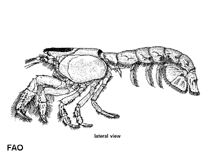
Rostrum ending in 3 teeth, the lateral at the end of a ridge that is separated from the central part of the rostrum by a deep groove; a shallow median longitudinal groove is present in the central part. The lower surface of the rostrum has no spines. Anterolateral border of carapace with a single spine at the level of the eye. First pereiopods subchelate. Dactylus of adult male with 9 to 11 oblique ridges on the outer surface, and with a low tooth in the proximal half of the cutting edge. Two denticulate ridges on the upper surface of the palm. Merus of the first pereiopod with a distinct subdistal anterodorsal spine; coxa of that leg with a spine (Ref. 4).
It has a maximum total body length of 9.5 cm (Ref. 4). It is found in tidal mud flats and it makes Y-shaped burrows in the mud and are filter feeders (Ref. 4).
ວົງຈອນຊີວິດ ແລະພຶດຕິກໍາການຫາຄູ່
ການຈະເລີນເຕັມໄວ | ການສືບພັນ | ການວາງໄຂ່ | ໄຂ່ | ຄວາມດົກຂອງໄຂ່ປາ | ຕົວອ່ອນ
Members of the order Decapoda are mostly gonochoric. Mating behavior: Precopulatory courtship ritual is common (through olfactory and tactile cues); usually indirect sperm transfer.
Holthuis, L.B. 1991 FAO Species Catalogue. Vol. 13. Marine lobsters of the world. An annotated and illustrated catalogue of species of interest to fisheries known to date. FAO Fish. Synop. 125(13):292p. Rome: FAO. (ເອກະສານອ້າງອີງ 4)
ສະຖານະພາບບັນຊີແດງຂອງ IUCN
(ເອກະສານອ້າງອີງ 130435: Version 2025-2 (Global))
ສະຖານະ CITES (ເອກະສານອ້າງອີງ 108899)
Not Evaluated
CMS (ເອກະສານອ້າງອີງ 116361)
Not Evaluated
ໄພຂົ່ມຂູ່ຕໍ່ມະນຸດ
ການນໍາໃຊ້ຂອງມະນຸດ
ການປະມົງ: ເປັນສີນຄ້າ
FAO - Publication: search | FishSource |
ເຄື່ອງມື
ຂໍ້ມູນຕື່ມອີກ
ນິເວດວິທະຍາເຂດຮ້ອນລາຍການອາຫານ (ຜູ້ຖືກລ້າ)ອົງປະກອບຂອງອາຫານການບໍລິໂພກອາຫານຜູ້ລ້າ ນະໂຍບາຍດ້ານປະຊາກອນການເຕີບໃຫຍ່ສູງສຸດ. ອາຍຸ / ຂະຫນາດຄວາມຍາວ-ນ້ໍາຫນັກ rel.ຄວາມຍາວ - ຄວາມຍາວ rel.ຄວາມຖີ່ຄວາມຍາວການແປງມະຫາຊົນຄວາມອຸດົມສົມບູນ ວົງຈອນຊີວິດການສືບພັນການຈະເລີນເຕັມໄວຄວາມດົກຂອງໄຂ່ປາການວາງໄຂ່ໄຂ່ການພັດທະນາໄຂ່ຕົວອ່ອນ ຟີຊິກສາດການບໍລິໂພກອົກຊີເຈນ
ມະນຸດທີ່ກ່ຽວຂ້ອງສະແຕມ, ຫຼຽນ, ອື່ນໆ.
ແຫຼ່ງອີນເຕີເນັດ
ການຄາດຄະເນໂດຍອີງໃສ່ແບບຈໍາລອງ
ຄວາມສ່ຽງຕໍ່ການຫາປາ
(ເອກະສານອ້າງອີງ 71543) |
Low vulnerability (23 of 100). |
ປະເພດລາຄາ
(ເອກະສານອ້າງອີງ 80766): |
Unknown. |