Malacostraca |
Amphipoda |
Corophiidae
Umwelt: Milieu / Klimazone / Tiefenbereich / Verbreitungsgebiet
Ökologie
Benthic; brackwasser; tiefenbereich 4 - 9 m (Ref. 125359). Temperate; 1°C - 17°C (Ref. 125375)
Northwest Pacific, Northern Atlantic, Mediterranean and Black Sea: from China to Bay of Fundy, Norway and east to Egypt. Polar to subtropical.
Länge bei der ersten Reifung / Größe / Gewicht / Alter
Geschlechtsreife: Lm ? range ? - ? cm
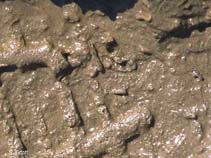
Both infaunal and epifaunal on Zostera; buries in sandy substrate (Ref. 95819), up to 5 cm deep (Ref. 125375). Also found in mudflats, saltmarsh pools and brackish ditches (Ref. 125375). A surface detritivore (Ref. 96470).
Lebenszyklus und Paarungsverhalten
Geschlechtsreife | Fortpflanzung | Ablaichen | Eier | Fruchtbarkeit | Larven
Members of the order Amphipoda are gonochoric and sexually dimoprhic (males larger than females). Mating behavior: Males locate potential partners with the aid of their antenna to detect the pheromones released by the females; the male then rides or carries the female until the latter is ready to molt. When the female is ready, the male pushes the sperm into the marsupium and releases the female afterwards. A few hours later, the female releases her eggs into the marsupium for fertilization. Life cycle: Eggs are brooded in the marsupium. Eggs hatch into juveniles and remain in the marsupium for a few days. Each species undergo 20 molts at most, i.e., 1-year long life cycle.
Chambers, M.R. and H. Milne 1979 Seasonal variation in the condition of some intertidal invertebrates of the Ythan Estuary, Scotland. Estuarine and Coastal Marine Science 8:411-419. (Ref. 85301)
IUCN Rote Liste Status
(Ref. 130435: Version 2025-2 (Global))
CITES Status (Ref. 108899)
Not Evaluated
Not Evaluated
Bedrohung für Menschen
Nutzung durch Menschen
FAO - Publication: search | FishSource |
Tools
Mehr Information
Trophische ÖkologieLebensmittel (Beutetiere)
Nahrungszusammensetzung
Nahrungsaufnahme
Räuber
LebenszyklusFortpflanzungGeschlechtsreifeFruchtbarkeitAblaichenEierEientwicklungLarven PhysiologieSauerstoffverbrauch
MenschenbezogenBriefmarken, Münzen, Verschiedenes.
Internet Quellen
Schätzungen auf der Grundlage von Modellen
Anfälligkeit der Fischerei
(Ref. 71543) |
(0 of 100). |
Preiskategorie
(Ref. 80766): |
Unknown. |