Malacostraca |
Amphipoda |
Corophiidae
Miljö: miljö / Klimatzon / djupintervall / distributionsområde
Ekologi
Benthic; brackvatten; djupintervall 4 - 9 m (Ref. 125359). Temperate; 1°C - 17°C (Ref. 125375)
Northwest Pacific, Northern Atlantic, Mediterranean and Black Sea: from China to Bay of Fundy, Norway and east to Egypt. Polar to subtropical.
Längd vid första mognad / Storlek / Vikt / Ålder
Könsmognad: Lm ? range ? - ? cm
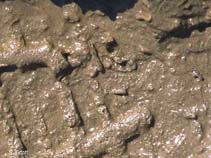
Both infaunal and epifaunal on Zostera; buries in sandy substrate (Ref. 95819), up to 5 cm deep (Ref. 125375). Also found in mudflats, saltmarsh pools and brackish ditches (Ref. 125375). A surface detritivore (Ref. 96470).
Livscykel och parningsbeteende
Könsmognad | Reproduktion | Lek | Ägg | Fekunditet | Larver
Members of the order Amphipoda are gonochoric and sexually dimoprhic (males larger than females). Mating behavior: Males locate potential partners with the aid of their antenna to detect the pheromones released by the females; the male then rides or carries the female until the latter is ready to molt. When the female is ready, the male pushes the sperm into the marsupium and releases the female afterwards. A few hours later, the female releases her eggs into the marsupium for fertilization. Life cycle: Eggs are brooded in the marsupium. Eggs hatch into juveniles and remain in the marsupium for a few days. Each species undergo 20 molts at most, i.e., 1-year long life cycle.
Chambers, M.R. and H. Milne 1979 Seasonal variation in the condition of some intertidal invertebrates of the Ythan Estuary, Scotland. Estuarine and Coastal Marine Science 8:411-419. (Ref. 85301)
Status på IUCN:s rödlista
(Ref. 130435: Version 2025-2 (Global))
CITES-status (Ref. 108899)
Not Evaluated
Not Evaluated
Hot mot människor
Mänskliga användningsområden
FAO - Publication: search | FishSource |
Verktyg
Ytterligare information
Trofisk ekologiLivsmedelsartiklar (preys)
Födosammansättning
Födointag
Predatorer
LivscykelReproduktionKönsmognadFekunditetLekÄggUtveckling av äggLarver MänniskorelateradFrimärken, mynt, diverse.
Internet-källor
Uppskattningar baserade på modeller
Sårbarhet i fisket
(Ref. 71543) |
(0 of 100). |
Priskategori
(Ref. 80766): |
Unknown. |