Malacostraca |
Decapoda |
Penaeidae
ສະພາບແວດລ້ອມ: ສະພາບແວດລ້ອມ / ເຂດດິນຟ້າອາກາດ / ລະດັບຄວາມເລິກ / ຂອບເຂດການແຈກຢາຍ
ນິເວດວິທະຍາ
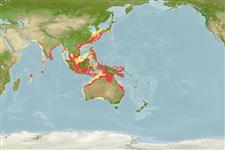
Benthic; ນ້ຳກ່ອຍ; ລະດັບຄວາມເລິກ 0 - 150 m (ເອກະສານອ້າງອີງ 10), usually ? - 60 m (ເອກະສານອ້າງອີງ 10). Tropical; 17°C - 38°C (ເອກະສານອ້າງອີງ 72772), preferred 24°C (ເອກະສານອ້າງອີງ 107945); 36°N - 33°S, 55°E - 154°E
Indo-Pacific: From Pakistan to Japan, the Malay Archipelago and Australia. Introduced in the Atlantic Ocean (Africa and USA). Tropical to temperate.
ຄວາມຍາວໃນການເຕີບໂຕເຕັມຄັ້ງທໍາອິດ / ຂະໜາດ / ນ້ຳໜັກ / ອາຍຸ
ການຈະເລີນເຕັມໄວ: Lm ?, range 4 - 4.22 cm Max length : 33.6 cm TL ຕົວຜູ້/ບໍ່ມີເພດ; (ເອກະສານອ້າງອີງ 8); 35 cm TL (female); ນ້ຳໜັກສູງສຸດທີ່ເຄຍຈັດພີມມາ: 250.00 g (ເອກະສານອ້າງອີງ 116487)
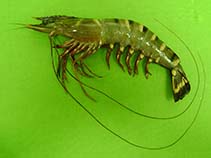
Uniformly glabrous body; carapace with well-developed antennal and hepatic spines. Horizontal and straight hepatic carina. Rostrum armed with 7 or 8 dorsal and 3 ventral teeth. Color: body is reddish with darker bands. Brown to blue pleopods and reddish fringing setae.
Caught by pond fishing and inshore fishing. Considered a delicacy in the Philippines that in 1980, retail price was Php60 to 80 (US$8.6 to 11.5)/kg in Manila and Php50 to 70 in local areas (Ref. 10). Maximum total length (female) from Ref. 104052. Juveniles are found in estuarine environments (Ref. 8), in mangrove inlets (Ref. 121464) and mangrove vegetate area (Ref. 121475). Enters shallow brackish water or kept in ponds (Ref. 374). Found in seagrass and among shells (Ref. 121467). Pelagic, i.e. recorded in the water column (Ref. 106854). Less of a scavenger; mainly a predator of slow moving benthic macroinvertebrates like small crabs and mollusks. Also capable of capturing more mobile forms like small penaeids and fishes (Ref. 102664).
Members of the order Decapoda are mostly gonochoric. Mating behavior: Precopulatory courtship ritual is common (through olfactory and tactile cues); usually indirect sperm transfer.
Holthuis, L.B. 1980 FAO Species Catalogue. Vol. 1. Shrimps and prawns of the world. An annotated catalogue of species of interest to fisheries. FAO Fish. Synop. 125(1):271 p. Rome: FAO. (ເອກະສານອ້າງອີງ 8)
ສະຖານະພາບບັນຊີແດງຂອງ IUCN
(ເອກະສານອ້າງອີງ 130435: Version 2025-2 (Global))
ສະຖານະ CITES (ເອກະສານອ້າງອີງ 108899)
Not Evaluated
CMS (ເອກະສານອ້າງອີງ 116361)
Not Evaluated
ໄພຂົ່ມຂູ່ຕໍ່ມະນຸດ
ການນໍາໃຊ້ຂອງມະນຸດ
ການປະມົງ: ເປັນສີນຄ້າ
FAO - Aquaculture Systems: ໂປຣໄຟລ໌ສາຍພັນ, production search; ການປະມົງ: ໂປຣໄຟລ໌ສາຍພັນ, landings search; Publication: search | FishSource | ທະເລອ້ອມຂ້າງພວກເຮົາ
ເຄື່ອງມື
ຂໍ້ມູນຕື່ມອີກ
ຟີຊິກສາດການບໍລິໂພກອົກຊີເຈນ
ມະນຸດທີ່ກ່ຽວຂ້ອງສະແຕມ, ຫຼຽນ, ອື່ນໆ.
ແຫຼ່ງອີນເຕີເນັດ
ການຄາດຄະເນໂດຍອີງໃສ່ແບບຈໍາລອງ
ຄວາມຢືດຢຸ່ນ
(Ref. 69278): |
ສູງ, ປະຊາກອນຕຳ່ສຸດທີ່ໃຊ້ເວລາສອງໜ້ອຍກວ່າ 15 ເດືອນ (K=0.94-1.7) |
Rate of population increase
|
Prior r = 1.19, 95% CL = 0.79 - 1.79, Based on 4 data-limited stock assessments. |
ຄວາມສ່ຽງຕໍ່ການຫາປາ
(ເອກະສານອ້າງອີງ 71543) |
Low vulnerability (19 of 100). |
ຄວາມສ່ຽງດ້ານສະພາບອາກາດ
(ເອກະສານອ້າງອີງ 125649) |
Moderate vulnerability (35 of 100) |
ປະເພດລາຄາ
(ເອກະສານອ້າງອີງ 80766): |
Very high. |
Nutrients
|
Calcium = 109 [35, 184] mg/100g; Iron = 1.59 [1.21, 1.97] mg/100g; Protein = 20.2 [19.2, 21.3] %; Omega3 = 0.285 [0.185, 0.386] g/100g; Selenium = 48.3 [-31.7, 128.3] μg/100g; VitaminA = 0 μg/100g; Zinc = 1.79 [1.17, 2.40] mg/100g (wet weight); based on nutrient studies. |