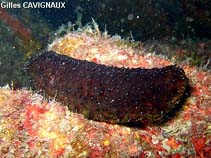
Holothuroidea |
Holothuriida |
Holothuriidae
ສະພາບແວດລ້ອມ: ສະພາບແວດລ້ອມ / ເຂດດິນຟ້າອາກາດ / ລະດັບຄວາມເລິກ / ຂອບເຂດການແຈກຢາຍ
ນິເວດວິທະຍາ
Benthic; ລະດັບຄວາມເລິກ 1 - 125 m (ເອກະສານອ້າງອີງ 85345). Subtropical
ການແຜ່ກະຈາຍ
Territories | ເຂດ FAO | ລະບົບນິເວດ | ການປະກົດຕົວ | ການແນະນຳ
Atlantic and the Mediterranean Sea.
ຄວາມຍາວໃນການເຕີບໂຕເຕັມຄັ້ງທໍາອິດ / ຂະໜາດ / ນ້ຳໜັກ / ອາຍຸ
ການຈະເລີນເຕັມໄວ: Lm ? range ? - ? cm Max length : 25.0 cm TL ຕົວຜູ້/ບໍ່ມີເພດ; (ເອກະສານອ້າງອີງ 358)
Maximum size: 25 cm. Body: with more or less round cross section; ventral face with 3 lines with parapodes with suction cup. Tegument: more fragile constellated with multiple papillae. Color: Brown; papillae, in a variable number, being of beige or white color, at always brown end. The animal is equipped with tubes of Vat which it expels with the least stimulus (Ref. 358).
Maximum size: 25 cm. Species presents at all depths. In the event of stimulus by contact, defends itself by expelling its tubes of Vat. Very adherent, they discourage frequently inclinations of the possible attackers or predatory. When the stimulus persist, the animal can go until excreting the whole of its digestive tract. The tubes of Vat and the bodies assigned to digestion are regenerated in the span of a few weeks if the conditions are favorable (Ref. 358). habitat: Hard funds of primary education types and secondary, more rarely in herbarium; very commune in the Mediterranean basin. Nourishes various organic fragments, (charging) literally the elements of the ground in its oral opening; located at the back of the body, using its tentacles oral of flattened form. The animal sorts and introduces the edible organic substances, and rejects the elements not metabolized, particularly sand, in the form of lengthened excrements (Ref. 358).
ວົງຈອນຊີວິດ ແລະພຶດຕິກໍາການຫາຄູ່
ການຈະເລີນເຕັມໄວ | ການສືບພັນ | ການວາງໄຂ່ | ໄຂ່ | ຄວາມດົກຂອງໄຂ່ປາ | ຕົວອ່ອນ
Members of the class Holothuroidea are gonochoric and have only one gonad. Spawning and fertilization are both external and some exhibit brooding. Life cycle: Embryos develop into planktotrophic larvae (auricularia) then into doliolaria (barrel-shaped stage) which later metamorphose into juvenile sea cucumbers.
Göthel, H. 1992 Guide de la faune sous-marine: La Méditerranée. Invertébrés marins et poissons. Eygen Ulmer GmbH & Co. 318 p. (ເອກະສານອ້າງອີງ 358)
ສະຖານະພາບບັນຊີແດງຂອງ IUCN
(ເອກະສານອ້າງອີງ 130435: Version 2025-2 (Global))
ສະຖານະ CITES (ເອກະສານອ້າງອີງ 108899)
Not Evaluated
CMS (ເອກະສານອ້າງອີງ 116361)
Not Evaluated
ໄພຂົ່ມຂູ່ຕໍ່ມະນຸດ
ການນໍາໃຊ້ຂອງມະນຸດ
FAO - Publication: search | FishSource |
ເຄື່ອງມື
ຂໍ້ມູນຕື່ມອີກ
ນິເວດວິທະຍາເຂດຮ້ອນລາຍການອາຫານ (ຜູ້ຖືກລ້າ)
ອົງປະກອບຂອງອາຫານ
ການບໍລິໂພກອາຫານ
ຜູ້ລ້າ
ວົງຈອນຊີວິດການສືບພັນການຈະເລີນເຕັມໄວຄວາມດົກຂອງໄຂ່ປາການວາງໄຂ່ໄຂ່ການພັດທະນາໄຂ່ຕົວອ່ອນ ມະນຸດທີ່ກ່ຽວຂ້ອງສະແຕມ, ຫຼຽນ, ອື່ນໆ.
ແຫຼ່ງອີນເຕີເນັດ
ການຄາດຄະເນໂດຍອີງໃສ່ແບບຈໍາລອງ
ຄວາມຢືດຢຸ່ນ
(Ref. 69278): |
ສູງ, ປະຊາກອນຕຳ່ສຸດທີ່ໃຊ້ເວລາສອງໜ້ອຍກວ່າ 15 ເດືອນ (K=0.66) |
ຄວາມສ່ຽງຕໍ່ການຫາປາ
(ເອກະສານອ້າງອີງ 71543) |
Low vulnerability (19 of 100). |
ປະເພດລາຄາ
(ເອກະສານອ້າງອີງ 80766): |
Unknown. |