Cephalopoda |
Myopsida |
Loliginidae
البيئة: الوسط / المنطقة المناخية / نطاق العمق / نطاق التوزيع
البيئة
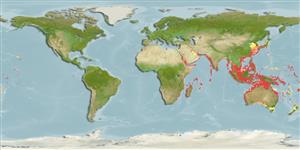
القاع; مياه مخلوطة; نطاق العمق 0 - 100 m (مرجع 275). Tropical; 51°N - 48°S, 22°E - 155°W (مرجع 106950)
Indo-Pacific: from Japan to Australia and New Zealand coasts, from Hawaii to the East African coast, north to Red Sea and south to Madagascar. Introduced in the Mediterranean Sea.
الطول عند النضج الأول / الحجم / وزن / العمر
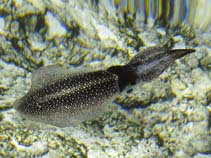
النضج: Lm ? range ? - ? cm Max length : 40.1 cm ML ذكر/ مختلط الجنس; (مرجع 121859); أعلا وزن تم نشرة: 1.80 g (مرجع 275)
Also caught by set nets and spears and jigs. Demersal neritic species (Ref. 105081). Inhabits warm coastal waters (Ref. 101164). Found among rock reefs, seaweeds and estuaries (Ref. 105081). Primarily active at night and is found in shallow waters, from 0 to 100 m in depth. Moves to deeper waters or in proximity to floating driftwood, reefs, rocks, or seagrasses during daylight (Also Ref. 129713). Often solitary (Ref. 101164). Voracious (Ref. 101165) and strictly carnivorous predator (Refs. 101164, 129713). Mainly consumes mollusks, fishes (Ref. 101164) and prawns (Ref. 101165). Utilizes its characteristic tentacles to catch live prey (Ref. 101164). Exhibits cannibalism on smaller conspecifics (Ref. 101164) or among size classes (Ref. 101165).
دورة الحياة وسلوك التزاوج
النضج | التكاثر | وضع البيض | بيض | الخصوبة | اليرقات
Members of the class Cephalopoda are gonochoric. Male and female adults usually die shortly after spawning and brooding, respectively. Mating behavior: Males perform various displays to attract potential females for copulation. During copulation, male grasp the female and inserts the hectocotylus into the female's mantle cavity where fertilization usually occurs. Life cycle: Embryos hatch into planktonic stage and live for some time before they grow larger and take up a benthic existence as adults.
Roper, C.F.E., M.J. Sweeney and C.E. Nauen 1984 FAO Species Catalogue. Vol. 3. Cephalopods of the world. An annotated and illustrated catalogue of species of interest to fisheries. FAO Fish. Synop. 125(3):277p. Rome: FAO. (مرجع 275)
حالة القائمة الحمراء للاتحاد الدولي لحفظ الطبيعة والموارد الطبيعية
(مرجع 130435: Version 2025-2 (Global))
حالته حسب اتفاقية سايتس (مرجع 108899)
Not Evaluated
Not Evaluated
خطر للأنسان
استخدامات بشرية
مصائد: تجاري
FAO - مصائد: landings search; Publication: search | FishSource | البحر حولنا
أدوات
مزيد من المعلومات
دورة الحياةالتكاثرالنضجالخصوبةوضع البيضبيضتطور البيضةاليرقات علم وظائف الأعضاءاستهلاك الأوكسجين
ذات الصلة بالبشرطوابع بريدية وعملات معدنية ومتنوعة
مصادر علي الأنترنت
تقديرات تستند إلى النماذج
المرونه
(Ref. 69278): |
عالي, الحد الزمني الأدني لتضاعف عدد أفراد المجتمع أقل من 15 شهر (K=0.73-1.25) |
ضعف الصيد
(مرجع 71543) |
Low vulnerability (19 of 100). |
فئة السعر
(مرجع 80766): |
Very high. |
Nutrients
|
Calcium = 126 [75, 177] mg/100g; Iron = 4.79 [1.67, 7.92] mg/100g; Protein = 15.5 [13.7, 17.4] %; Omega3 = 0.414 [0.262, 0.566] g/100g; Selenium = 57.8 [48.5, 67.2] μg/100g; VitaminA = 0 μg/100g; Zinc = 1.97 [0.92, 3.02] mg/100g (wet weight); based on nutrient studies. |