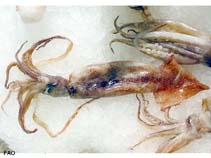
Cephalopoda |
Oegopsida |
Ommastrephidae | Illicinae
ပတ်ဝန်းကျင် : ပတ်ဝန်းကျင် / ရာသီဥတုဇုန် / အနက္အတိုင္းအတာ / ဖြန့်ဖြူးမှုအပိုင်း
ေဂဟေဗဒကိုေလ့လာေသာ ဘာသာရပ္
ေအာက္ေျခေနရနက္ပိုင္းမဟုတ္ေသာေနရာ; အနက္အတိုင္းအတာ 0 - 1000 m (က်မ္းကိုးစာရင္း 275). Tropical, preferred 21°C (က်မ္းကိုးစာရင္း 107945); 70°N - 26°N, 81°W - 2°W (က်မ္းကိုးစာရင္း 275)
Atlantic Ocean: British Isles north to Iceland and Greenland.
ပထမအရွယ်တွင် အရှည် / အရြယ္အစား / အေလးခ်ိန္ / အသက္အရြယ္
မိ်ဳးပြားရန္အရြယ္ေရာက္ျပီ: Lm ? range ? - ? cm Max length : 27.0 cm ML အထီး/လိြင္ခြဲျခားျခင္းမျပဳနုိင္ေသာ; (က်မ္းကိုးစာရင္း 275); 31 cm ML (female)
Maximum mantle length is 31cm (females) and 27cm (males) in the northern part of its distributional range, but 20 cm (females) and 18cm (males) in the southern part (Ref. 3722). Feeds on euphausiids, capelin, herring, juvenile mackerel (Ref. 275).
ဘဝသံသရာနှင့် မိတ်လိုက်သည့် အပြုအမူ
မိ်ဳးပြားရန္အရြယ္ေရာက္ျပီ | မ်ိဳးပြားသားေပါက္ျခင္း | သားေပါက္ျခင္း | ဥမ်ား | ဥခ်နွဳန္း | သားေလာင္း
Members of the class Cephalopoda are gonochoric. Male and female adults usually die shortly after spawning and brooding, respectively. Mating behavior: Males perform various displays to attract potential females for copulation. During copulation, male grasp the female and inserts the hectocotylus into the female's mantle cavity where fertilization usually occurs. Life cycle: Embryos hatch into planktonic stage and live for some time before they grow larger and take up a benthic existence as adults.
Roper, C.F.E., M.J. Sweeney and C.E. Nauen 1984 FAO Species Catalogue. Vol. 3. Cephalopods of the world. An annotated and illustrated catalogue of species of interest to fisheries. FAO Fish. Synop. 125(3):277p. Rome: FAO. (က်မ္းကိုးစာရင္း 275)
စိုးရိမ္ဖြယ္အေျခအေနသို႔ေရာက္ရွိေန ေသာမ်ိဳးသုဥ္းရွားပါးေတာ့မည့္မ်ိဳးစိတ္မ်ား၏အဆင့္အတန္း
(က်မ္းကိုးစာရင္း 130435: Version 2025-2 (Global))
မ်ဳိးသုန္းေပ်ာက္ကြယ္ရန္ နီးကပ္ေနေသာမ်ဳိးစိတ္မ်ားကို ေရာင္းဝယ္ျခင္းမွ ကာကြယ္ရန္ ႏုိင္ငံတကာဆိုင္ရာအစည္းအေဝး၏ အေျခအေန (က်မ္းကိုးစာရင္း 108899)
Not Evaluated
CMS (က်မ္းကိုးစာရင္း 116361)
Not Evaluated
လူသားမ်ားကို ထိတ္လန္႔ေျခာက္ျခားေစသည္။
လူသားမ်ား၏အသံုးခ်မႈ
ငါးလုပ္ငန္း: စီးပြားေရးးအရ
FAO - ငါးလုပ္ငန္း: ငါးမ်ိဳးစိတ္မ်ားအေၾကာင္းကို ေရးသားေဖာ္ျပထားခ်က္, landings search; Publication: search | FIRMS (Stock assessments) | FishSource | ကြ်နု္ပ္တို႔ပတ္၀န္းက်င္တြင္ရွိေသာ ပင္လယ္ျပင္
အသံုးျပဳေသာကိရိယာ
ပိုမိုေသာသတင္းအခ်က္အလက္မ်ားကိုရယူနုိင္ရန္္
အစာရရွိမႈကြင္းဆက္နွင့္ အစာစားေသာအေလ့အက်င့္နွင့္ ပတ္၀န္းက်င္ဆက္စပ္မႈ ေဂဟေဗဒကိုေလ့လာေသာ ဘာသာရပ္ ဇီဝကမ္မဗေဒေလအသံုးျပဳမႈ ၊ ေလသံုးစြဲမႈပမာဏ
လူသားနဲ့ဆိုင်တယ်။တံဆိပ်ခေါင်းများ၊ အကြွေစေ့များ၊
အင္တာနက္အရင္းအျမစ္
မော်ဒယ်များကို အခြေခံ၍ ခန့်မှန်းချက်
ထိခိုက္ဒဏ္ရာရရွျပီးမွျပန္လည္ေကာင္းမြန္လာေသာ/မ်ိဳးသုဥ္းေပ်ာက္ကြယ္လုနီးပါးျဖစ္ေနျပီမွ ျပန္လည္ေတြ႕ရွိရေသာ
(Ref. 69278): |
အရပ္၊ အရွည္, (၁၅) လထက္ ေလ်ာ့နည္းေသာအခ်ိန္နွစ္ဆအတြင္း
အနည္းဆံုးဦးေရ (K=0.3-2.5) |
ငါးဖမ်းခြင်း အားနည်းချက်
(က်မ္းကိုးစာရင္း 71543) |
Low vulnerability (17 of 100). |
ရာသီဥတု အားနည်းချက်
(က်မ္းကိုးစာရင္း 125649) |
(0 of 100) |
ေစ်းနႈန္းအမ်ိဳးအစားကို အဆင့္ဆင့္ခြဲျခားျခင္း
(က်မ္းကိုးစာရင္း 80766): |
Low. |
Nutrients
|
Calcium = 126 [75, 177] mg/100g; Iron = 4.79 [1.67, 7.92] mg/100g; Protein = 15.5 [13.7, 17.4] %; Omega3 = 0.414 [0.262, 0.566] g/100g; Selenium = 57.8 [48.5, 67.2] μg/100g; VitaminA = 0 μg/100g; Zinc = 1.97 [0.92, 3.02] mg/100g (wet weight); based on nutrient studies. |