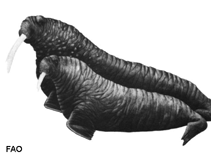
Mammalia |
Carnivora |
Odobenidae
Milieu: milieu / Klimaatzone / Diepte / verspreidingsgebied
Ecologie
Bathydemersaal; diepte 0 - 91 m (Ref. 124244). Temperate; 84°N - 54°N, 180°W - 180°E
Northern Atlantic, Northern Pacific, and the Arctic: from Arctic Canada, northern Greenland, south to Denmark and east to Russia and Alaska. Odobenus rosmarus rosmarus: Russia, Canada, Greenland, Iceland, Norway, UK, Barents Sea, Netherlands, Belgium, Atlantic Ocean, Bay of Biscay, Hudson Bay, Kara Sea, Prince Edward Island; Odobenus rosmarus laptevi: Russia, Laptev Sea, Kara Sea, East Siberian Sea; Odobenus rosmarus divergens: Arctic Ocean, Bering Sea, Chukchi Sea, Alaska, Russia, Beaufort Sea, Sea of Okhotsk, Japan, Kamchatka.
Lengte bij maturiteit / Grootte / Gewicht / Leeftijd
Maturiteit: Lm ? range ? - ? cm Max length : 380 cm TL mannelijk / geslacht onbekend; (Ref. 99323); 300 cm TL (female); max. gepubliceerd gewicht: 1.9 t (Ref. 99323); max. gepubliceerd gewicht: 1.9 t
Found in shallow water and coastal habitats, usually associated with pack ice; regularly haul out on sandy beaches, rocky shores, and ice floes to rest and moult. Feeds on benthic invertebrates (i.e. clams, worms, snails, shrimp and slow-moving fish). Maximum measurements of female species based from Ref. 1394. Found in shallow water and coastal habitats, usually associated with pack ice; regularly haul out on sandy beaches, rocky shores, and ice floes to rest and moult. Feeds on benthic invertebrates (i.e. clams, worms, snails, shrimp and slow-moving fish) (Ref. 1394).
Levenscyclus en paargedrag
Maturiteit | Voortplanting | Paaien | Eieren | Fecunditeit | Larven
Jefferson, T.A., S. Leatherwood and M.A. Webber 1993 FAO species Identification Guide: Marine Mammals of the World. Rome, FAO. 320 p. + 587 figures. (Ref. 1394)
Status op de Rode Lijst van het IUCN
(Ref. 130435: Version 2025-2 (Global))
CITES status (Ref. 108899)
Not Evaluated
Gevaar voor de mens
Gebruik door de mens
Visserij: commercieel
FAO - visserij: soortsprofiel, landings search; Publication: search | FishSource | Sea Around Us
Tools
Meer informatie
LevenscyclusVoortplantingMaturiteitFecunditeitPaaienEierenOntwikkeling van de eierenLarven FysiologieZuurstofverbruik
Menselijk gerelateerdPostzegels, munten, diversen.
Internetbronnen
Schattingen op basis van modellen
Weerstandsvermogen
(Ref. 69278): |
Gemiddeld, minimale populatieverdubbelingstijd 1,4-4,4 jaar (K=0.1-0.31) |
Kwetsbaarheid van de visserij
(Ref. 71543) |
Very high vulnerability (76 of 100). |
Prijsklasse
(Ref. 80766): |
Unknown. |