Malacostraca |
Decapoda |
Portunidae
環境:環境 / 気候帯 / 深さの範囲 / 分布範囲
生態学
底生の漂泳性; 深さの範囲 0 - 100 m (参照 132434). Tropical, preferred 24°C (参照 107945); 42°N - 38°S, 79°E - 154°E (参照 106948)
Indo-West Pacific: from Honshu, Japan, west to eastern India and Sri Lanka, and south to New South Wales, Australia.
初回成熟時の長さ / サイズ / 重さ / 年齢
成熟: Lm 13.1 range ? - ? cm Max length : 15.9 cm CW オス/雌雄の選別がない; (参照 125642)
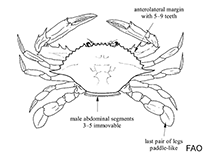
Carapace tough to granulose, regions discernible; front with 3 acutely triangular teeth; 9 teeth on each anterolateral margin, the last tooth much larger than preceding teeth. Larger chela with conical tooth at base of fingers; pollex ridged. Color: carapace dull green to brown.
Minimum depth assumed from its ecology. Shallow waters up to depths of 50 m. Inhabits sandy to sandy-muddy substrates (Ref. 343). Benthopelagic predator, feeding mainly on bivalves (Lamellibranchia), benthic crustaceans, fishes and cephalopods (Ref. 117071).
ライフサイクルと交尾行動
成熟 | 繁殖 | 放精 | 卵 | 生産力 | 幼生
Members of the order Decapoda are mostly gonochoric. Mating behavior: Precopulatory courtship ritual is common (through olfactory and tactile cues); usually indirect sperm transfer.
主な参考文献
参考文献 | コーディネーター | 協力者
Ng, P.K.L. 1998 Crabs. p. 1045-1155. In K.E. Carpenter and V.H. Niem (eds) FAO species identification guide for fishery purposes. The living marine resources of the Western Central Pacific. Volume 2. Cephalopods, crustaceans, holothurians and sharks. Rome, FAO. 1998. pp. 687-1396. (参照 343)
IUCNのレッドリストの状況は
(参照 130435: Version 2025-2 (Global))
ワシントン条約ステータス (参照 108899)
Not Evaluated
Not Evaluated
人間に対する脅威
Harmless
人間の用途
水産業: 商業
FAO - Aquaculture Systems: production search水産業: 種の外形, landings search; Publication: search | FishSource | 私達の周りの海
用具
インターネットの情報源
モデルに基づく推定値
回復力
(Ref. 69278): |
高い, 15か月以下の倍増期間の最小個体群 (K=0.44-1.76) |
Rate of population increase
|
Prior r = 1.19, 95% CL = 0.79 - 1.79, Based on 2 data-limited stock assessments. |
漁業の脆弱性
(参照 71543) |
Low vulnerability (10 of 100). |
気候脆弱性
(参照 125649) |
Low to moderate vulnerability (33 of 100) |
価格帯
(参照 80766): |
Very high. |
Nutrients
|
Calcium = 109 [35, 184] mg/100g; Iron = 1.59 [1.21, 1.97] mg/100g; Protein = 20.2 [19.2, 21.3] %; Omega3 = 0.285 [0.185, 0.386] g/100g; Selenium = 48.3 [-31.7, 128.3] μg/100g; VitaminA = 0 μg/100g; Zinc = 1.79 [1.17, 2.40] mg/100g (wet weight); based on nutrient studies. |