Malacostraca |
Stomatopoda |
Squillidae
สิ่งแวดล้อม : สิ่งแวดล้อม / เขตภูมิอากาศ / ระดับความลึก / ระยะการกระจายสินค้า
นิเวศวิทยา
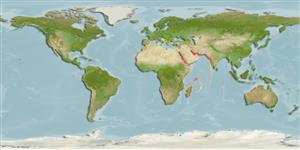
Benthic; ระดับความลึก 9 - 200 m (อ้างอิง 128606), usually 20 - 40 m (อ้างอิง 3497). Subtropical; 30°N - 13°N, 32°E - 44°E
Western Indian Ocean: Red Sea. Introduced in the Mediterranean.
ความยาวเมื่อครบกำหนดครั้งแรก / ขนาด / น้ำหนัก / อายุ
วัยเจริญพันธุ์: Lm ? range ? - ? cm Max length : 21.6 cm TL เพศผู้/กระเทย; (อ้างอิง 365); common length : 15.0 cm TL เพศผู้/กระเทย; (อ้างอิง 365)
Length: common up to 15 cm (Ref. 363).
Even if it currently does not have a commercial importance in the Mediterranean (rare on the markets of Cyprus, Israel and Turkey), this species can have a potential importance for fishing. Common on the markets of Suez and lsmaïlia. Maximum depth from Ref. 122160. Prefers soft bottoms in coastal waters but also tolerates open waters and sheltered brackish areas (Ref. 122163). Above muddy, sandy, argillaceous funds and of gravel at depths of 10 to 50 m (Ref. 365). Also over sandy-silt bottoms at depths between 150 and 200 m (Ref. 122160).
วงจรชีวิตและพฤติกรรมการผสมพันธุ์
วัยเจริญพันธุ์ | การสืบพันธุ์ | การวางไข่ | เซลสืบพันธ์ของเพศเมีย(ไข่) | ความดกของไข่ | ตัวอ่อน
Some members of the order Stomatopoda pair for life and some come together only to mate. Males produce sperm ducts rather than spermatophores; females can brood a maximum of 50,000 eggs. Life cycle: Eggs hatch to a planktonic zoea which lasts for 3 months.
Manning, R.B. 1995 Stomatopod Crustacea of Vietnam: the legacy of Raoul Serène. Crustacean Research (Special No. 4): 1-339, figs. 1-142, pl. 1-38. (อ้างอิง 3145)
สถานะบัญชีแดงของ IUCN
(อ้างอิง 130435: Version 2025-2 (Global))
สถานะไซเตส (อ้างอิง 108899)
Not Evaluated
CMS (อ้างอิง 116361)
Not Evaluated
ภัยคุกคามต่อมนุษย์
Harmless
การใช้ของมนุษย์
การประมง: การค้า
FAO - Publication: search | FishSource |
เครื่องมือ
ข้อมูลเพิ่มเติม
นิเวศวิทยาเขตร้อนรายการอาหาร (เหยื่อ)
องค์ประอบของอาหาร
การบริโภคอาหาร
ผู้ล่า
พลวัตของประชากรการเจริญเติบโตอายุสูงสุด / ขนาดความยาว-น้ำหนักสัมพันธ์ความยาว-ความยาวสัมพันธ์ความยาว-ความถี่การแปลงมวลอุดมสมบรูณ์ วงจรชีวิตการสืบพันธุ์วัยเจริญพันธุ์ความดกของไข่การวางไข่เซลสืบพันธ์ของเพศเมีย(ไข่)การพัฒนาไข่ตัวอ่อน เกี่ยวข้องกับมนุษย์แสตมป์ เหรียญ อื่นๆ
แหล่งที่มาจากอินเตอร์เน็ต
การประมาณค่าตามแบบจำลอง
ความเสี่ยงต่อการตกปลา
(อ้างอิง 71543) |
Low vulnerability (12 of 100). |
หมวดหมู่ราคา
(อ้างอิง 80766): |
Very high. |