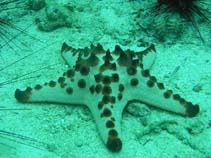
Asteroidea |
Valvatida |
Oreasteridae
ສະພາບແວດລ້ອມ: ສະພາບແວດລ້ອມ / ເຂດດິນຟ້າອາກາດ / ລະດັບຄວາມເລິກ / ຂອບເຂດການແຈກຢາຍ
ນິເວດວິທະຍາ
ກ່ຽວກັນຫີນ; ລະດັບຄວາມເລິກ 0 - 37 m (ເອກະສານອ້າງອີງ 89727). Tropical
Indo-West Pacific: from Seychelles to Australia and Japan.
ຄວາມຍາວໃນການເຕີບໂຕເຕັມຄັ້ງທໍາອິດ / ຂະໜາດ / ນ້ຳໜັກ / ອາຍຸ
ການຈະເລີນເຕັມໄວ: Lm ? range ? - ? cm Max length : 30.0 cm WD ຕົວຜູ້/ບໍ່ມີເພດ; (ເອກະສານອ້າງອີງ 800)
It is known as a good bioindicator species for monitoring reef health (Ref. 85384) and has been harvested extensively as an ornament (Ref. 98606). Occurs on seagrass beds and seaweed areas (Refs. 82802, 89727), particularly on reef flats (Ref. 85384). It is known to be an extra-oral feeder (Ref. 85384) or microphagous feeder (Ref. 98606). Feeds on microbial and microalgal films, both living and decomposing seagrass blades, and filamentous green algae (Ref. 98606).
ວົງຈອນຊີວິດ ແລະພຶດຕິກໍາການຫາຄູ່
ການຈະເລີນເຕັມໄວ | ການສືບພັນ | ການວາງໄຂ່ | ໄຂ່ | ຄວາມດົກຂອງໄຂ່ປາ | ຕົວອ່ອນ
The embryo hatches into gastrula stage after 24 hours prior to fertilization; after 4-5 days, the larvae has reached the bipinnaria stage with well-developed mouth, esophagus and stomach; and at the 7th day, pre- and post-oral arms are visible (Ref. 98606).
Bos, A.R., G.S. Gumanao, J.C.E. Alipoyo and L.T. Cardona 2008 Population dynamics, reproduction and growth of Indo-Pacific horned star, Protoreaster nodosus (Echinodermata; Asteroidea). Marine Biology 156:55-63. (ເອກະສານອ້າງອີງ 89727)
ສະຖານະພາບບັນຊີແດງຂອງ IUCN
(ເອກະສານອ້າງອີງ 130435: Version 2025-2 (Global))
ສະຖານະ CITES (ເອກະສານອ້າງອີງ 108899)
Not Evaluated
CMS (ເອກະສານອ້າງອີງ 116361)
Not Evaluated
ໄພຂົ່ມຂູ່ຕໍ່ມະນຸດ
Harmless
ການນໍາໃຊ້ຂອງມະນຸດ
FAO - Publication: search | FishSource |
ເຄື່ອງມື
ຂໍ້ມູນຕື່ມອີກ
ຟີຊິກສາດການບໍລິໂພກອົກຊີເຈນ
ມະນຸດທີ່ກ່ຽວຂ້ອງສະແຕມ, ຫຼຽນ, ອື່ນໆ.
ແຫຼ່ງອີນເຕີເນັດ
ການຄາດຄະເນໂດຍອີງໃສ່ແບບຈໍາລອງ
ຄວາມສ່ຽງຕໍ່ການຫາປາ
(ເອກະສານອ້າງອີງ 71543) |
Low vulnerability (20 of 100). |
ປະເພດລາຄາ
(ເອກະສານອ້າງອີງ 80766): |
Unknown. |