Aves |
Charadriiformes |
Laridae
สิ่งแวดล้อม : สิ่งแวดล้อม / เขตภูมิอากาศ / ระดับความลึก / ระยะการกระจายสินค้า
นิเวศวิทยา
ผิวน้ำ. Tropical; 35°N - 40°S (อ้างอิง 96995)
Indo-Pacific, Atlantic Ocean and the Mediterranean.
ความยาวเมื่อครบกำหนดครั้งแรก / ขนาด / น้ำหนัก / อายุ
วัยเจริญพันธุ์: Lm ? range ? - ? cm Max length : 45.0 cm TL เพศผู้/กระเทย; (อ้างอิง 8812); น้ำหนักสูงสุดที่มีการรายงาน: 180.00 g (อ้างอิง 356); อายุสูงสุดที่ได้รายงาน: 36 ปี (อ้างอิง 8545)
Culmen: 4.53 cm; tarsus: 2.52 cm; wing: 30.5 cm.
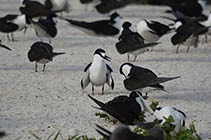
Total Length: 43 to 45 cm; Wingspan: 86 to 94 cm (Ref. 8812). Pelagic (Ref. 122680). Coastal and oceanic islands, and offshore (Ref. 356). In beach, shoreline and pelagic zone (Ref. 116102). Pantropic, pelagic species. Strong flyer, high over the ocean. Forms large breeding colonies on tropical and subtropical islands on sand, coral and rock, with or without vegetation. Forages in flocks (Ref. 84934). Remains 10 to 20 m above water then descends and wheels in circles before grabbing its food (Ref. 356). Feeding techniques: air dipping and contact dipping from the water surface (Refs. 356, 96995). Diet consists of squid, goatfish, flyingfish and mackerel scad (Ref. 122680). Does not plunge dive and rarely stays long in water as plumage is not waterproof. Colonies may suffer heavy losses of eggs by predatory cats (Ref. 84934).
วงจรชีวิตและพฤติกรรมการผสมพันธุ์
วัยเจริญพันธุ์ | การสืบพันธุ์ | การวางไข่ | เซลสืบพันธ์ของเพศเมีย(ไข่) | ความดกของไข่ | ตัวอ่อน
Birds go to the island at night, 3 months before laying. Hatching peaks in the middle of April. Most fledging shows in June and leave the island at the beginning of August while the adults leave at the end of August (Ref. 96995).
Lepage, D. 2007 Avibase -the World Bird Database. http://www.bsc-eoc.org/avibase/avibase.jsp [accessed 09/07/2007]. (อ้างอิง 7816)
สถานะบัญชีแดงของ IUCN
(อ้างอิง 130435: Version 2025-2 (Global))
สถานะไซเตส (อ้างอิง 108899)
Not Evaluated
CMS (อ้างอิง 116361)
Not Evaluated
ภัยคุกคามต่อมนุษย์
การใช้ของมนุษย์
FAO - Publication: search | FishSource |
เครื่องมือ
ข้อมูลเพิ่มเติม
เกี่ยวข้องกับมนุษย์แสตมป์ เหรียญ อื่นๆ
แหล่งที่มาจากอินเตอร์เน็ต
การประมาณค่าตามแบบจำลอง
ความสามารถในการกลับคืนสู่ปกติ
(Ref. 69278): |
ความสูง, เวลาต่ำสุดที่จะทำให้ประชากรเพิ่มขึ้นเป็น 2 เท่าใช้เวลาน้อยกว่า 15 เดือน (K=5.28; tm=3; tmax=36) |
ความเสี่ยงต่อการตกปลา
(อ้างอิง 71543) |
High vulnerability (63 of 100). |
หมวดหมู่ราคา
(อ้างอิง 80766): |
Unknown. |