Bivalvia |
Adapedonta |
Hiatellidae
สิ่งแวดล้อม : สิ่งแวดล้อม / เขตภูมิอากาศ / ระดับความลึก / ระยะการกระจายสินค้า
นิเวศวิทยา
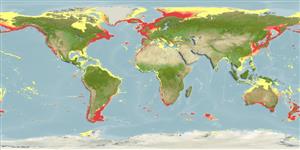
Benthic; กร่อย; ระดับความลึก 0 - 800 m (อ้างอิง 95344), usually 0 - 40 m (อ้างอิง 75831). Temperate; 85°N - 79°S, 180°W - 180°E
Circumglobal. Temperate to polar.
ความยาวเมื่อครบกำหนดครั้งแรก / ขนาด / น้ำหนัก / อายุ
วัยเจริญพันธุ์: Lm ? range ? - ? cm Max length : 5.0 cm SHL เพศผู้/กระเทย; (อ้างอิง 95344)
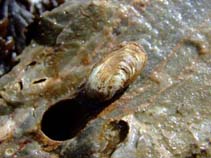
Benthic. It is found in forests of Macrocystis pyrifera (Ref. 92889). Found on sand/sandy sediments and rubble (Refs. 93550, 93290) in reefs (Ref. 3209). Inhabits the intertidal zone, attached by byssus on algal holdfasts, mussel mats, in empty burrows of rock boring bivalves (Ref. 5344'>95344, 93290). Inhabits hard bottoms (Ref. 2780), found nestling in rocks and other solid objects (Ref. 53). Free-living (Refs. 3123, 93290). Specimens were taken from logs washed up on the beaches (Ref. 88739). Suspension feeder (Ref. 66387). Reported from Hong Kong to be found on the ceilings and walls of submarine caves (Ref. 126058).
วงจรชีวิตและพฤติกรรมการผสมพันธุ์
วัยเจริญพันธุ์ | การสืบพันธุ์ | การวางไข่ | เซลสืบพันธ์ของเพศเมีย(ไข่) | ความดกของไข่ | ตัวอ่อน
Members of the class Bivalvia are mostly gonochoric, some are protandric hermaphrodites. Life cycle: Embryos develop into free-swimming trocophore larvae, succeeded by the bivalve veliger, resembling a miniature clam.
Raines, B. and M. Huber 2012 Biodiversity quadrupled - Revision of Eatser Island and Salas y Gómez bivalves. Zootaxa 3217:1-106. (อ้างอิง 93550)
สถานะบัญชีแดงของ IUCN
(อ้างอิง 130435: Version 2025-2 (Global))
สถานะไซเตส (อ้างอิง 108899)
Not Evaluated
CMS (อ้างอิง 116361)
Not Evaluated
ภัยคุกคามต่อมนุษย์
การใช้ของมนุษย์
FAO - Publication: search | FishSource |
เครื่องมือ
ข้อมูลเพิ่มเติม
นิเวศวิทยาเขตร้อนรายการอาหาร (เหยื่อ)องค์ประอบของอาหารการบริโภคอาหารผู้ล่า วงจรชีวิตการสืบพันธุ์วัยเจริญพันธุ์ความดกของไข่การวางไข่เซลสืบพันธ์ของเพศเมีย(ไข่)การพัฒนาไข่ตัวอ่อน เกี่ยวข้องกับมนุษย์แสตมป์ เหรียญ อื่นๆ
แหล่งที่มาจากอินเตอร์เน็ต
การประมาณค่าตามแบบจำลอง
ความสามารถในการกลับคืนสู่ปกติ
(Ref. 69278): |
ต่ำ, เวลาต่ำสุดที่จะทำให้ประชากรเพิ่มขึ้นเป็น 2 เท่าใช้เวลา 4.5 - 14 ปี (K=0.14) |
ความเสี่ยงต่อการตกปลา
(อ้างอิง 71543) |
Moderate vulnerability (40 of 100). |
หมวดหมู่ราคา
(อ้างอิง 80766): |
Unknown. |